Sacagawea
Sacagawea was a young Shoshone woman who travelled with the Lewis and Clark expedition from the Mandan villages to the Pacific Ocean and back, carrying her baby son the whole way. She was not the expedition’s guide, but she was much more than a passenger.
Who she was
She was born about 1788 among the Lemhi Shoshone of the Rocky Mountains. As a girl she was captured by Hidatsa raiders at the Three Forks of the Missouri and taken east to their villages in present-day North Dakota, where she became the wife of Toussaint Charbonneau, a French-Canadian trader. She was about sixteen when the captains met her in November 1804. (Chapter 7)
Her name
Most historians write Sacagawea, from Hidatsa words usually translated as “Bird Woman”. North Dakota spells it Sakakawea, and the older spelling Sacajawea comes from a different idea, that the name was Shoshone. The journals spell it many ways, and Clark often called her Janey. (Chapter 7 and Chapter 21)
What she did on the journey
- 4 November 1804
- Joins the Corps at the Mandan villages with her husband, Toussaint Charbonneau, hired as an interpreter. (Chapter 7)
- 11 February 1805
- Gives birth to her son, Jean Baptiste, at Fort Mandan. (Chapter 8)
- 14 May 1805
- Saves the journals and instruments when the white pirogue nearly capsizes. Lewis writes of “the Indian woman to whom I ascribe equal fortitude and resolution, with any person onboard at the time of the accedent.” (Chapter 11)
- 20 May 1805
- The captains name a river after her: “Sah-ca-ger we-ah or bird woman’s River.” (Chapter 11)
- June 1805
- Falls dangerously ill near the Marias River, and recovers. (Chapter 12)
- Late July 1805
- At the Three Forks, she knows the place where she was captured as a girl. (Chapter 14)
- 8 August 1805
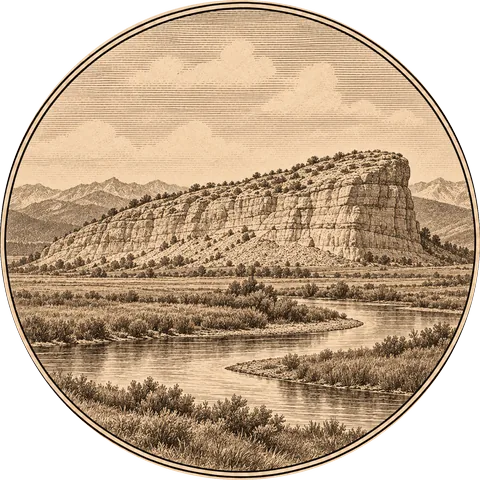
- Recognises Beaverhead Rock: “this hill she says her nation calls the beaver’s head.” (Chapter 14)
- 17 August 1805
- Finds that the Shoshone chief, Cameahwait, is her brother, and interprets as the Corps asks for horses. (Chapter 16)
- 25 August 1805
- Warns the captains that Cameahwait means to leave for the buffalo hunt, which would strand them without horses. (Chapter 16)
- October 1805
- On the Columbia, the sight of her with her baby reassures the nations that the Corps comes in peace. (Chapter 19)
- November 1805
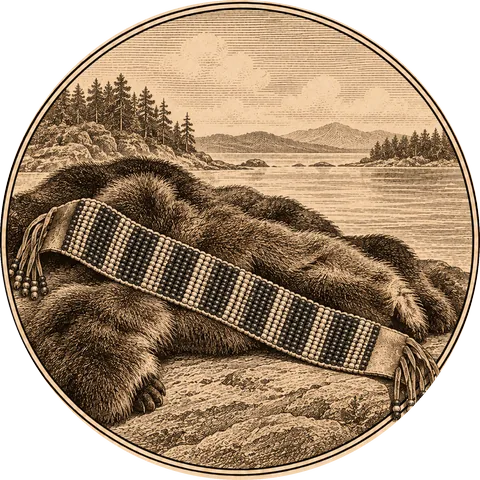
- Her belt of blue beads buys a sea-otter robe the captains want. (Chapter 20)
- 24 November 1805
- Votes with everyone else on where to spend the winter, written down as “Janey”. (Chapter 21)
- January 1806
- Insists on going to see a whale washed up on the coast, and sees the Pacific. (Chapter 23)
- July 1806
- Guides Clark’s party through the mountains to the Yellowstone, in country she knew as a girl. (Chapter 26)
- 17 August 1806
- Stays at the Mandan villages with Charbonneau and their son as the Corps goes home. (Chapter 29)
Myths and facts
Was she the guide?
No. The captains hired Charbonneau as an interpreter, and Sacagawea came because she could speak with the Shoshone, whose horses the Corps would need. She guided them only in country she knew, above all on the way home in July 1806. (Chapter 11 and Chapter 26)
Was she paid?
No. Charbonneau was paid about five hundred dollars. Afterwards Clark wrote to Charbonneau that she “diserved a greater reward for her attention and services on that rout than we had in our power to give her”. (Chapter 29)
When did she die?
In December 1812 a fur-trade clerk at Fort Manuel, in present-day South Dakota, recorded the death of Charbonneau’s Shoshone wife, and most historians accept that this was Sacagawea, aged about twenty-five. Shoshone tradition says she lived until 1884 and is buried on the Wind River Reservation in Wyoming. (Chapter 31)
What did she look like?
No picture of her was made in her lifetime. The faces on her statues and on the United States dollar coin of 2000 are imagined.
What happened to her children?
Clark kept his promise to help. Her son, Jean Baptiste, went to school in St. Louis, and Clark became the guardian of both him and her baby daughter, Lisette. (Chapter 31)
Read her story from the beginning →
More about the expedition: Summary, chapter by chapter · Timeline · The route · Who was on the expedition · What they discovered