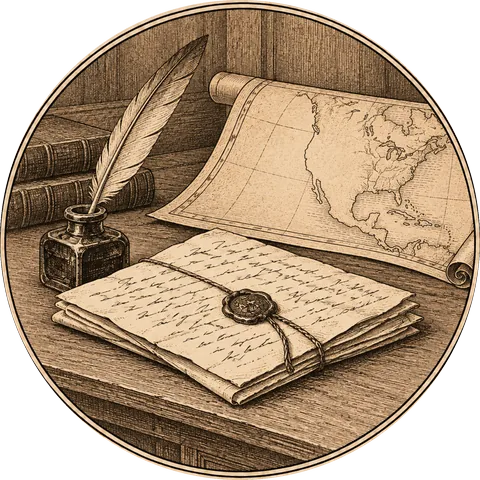
Jefferson’s Orders
Chapter 1 · The President’s Secret
On 20 June 1803 Jefferson set down Lewis’s orders in writing: follow the Missouri to its source, look for “the most direct & practicable water communication across this continent,” map the country, describe its plants, animals and peoples, and keep careful journals, with copies. Almost everything the expedition did began with this letter.
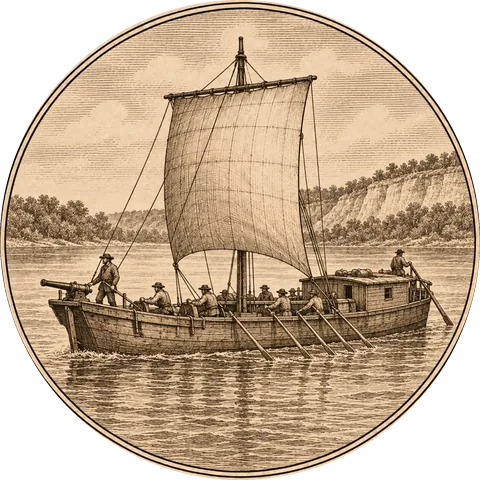
The Keelboat
Chapter 2 · Setting Out
A wooden boat fifty-five feet long, with one big square sail, twenty-two oars and a small cannon on a swivel at the front. Going upstream against the Missouri, the men mostly rowed it, pushed it with poles, or walked along the bank towing it on a long rope. In the spring of 1805 it went back down the river, loaded with gifts for Jefferson.
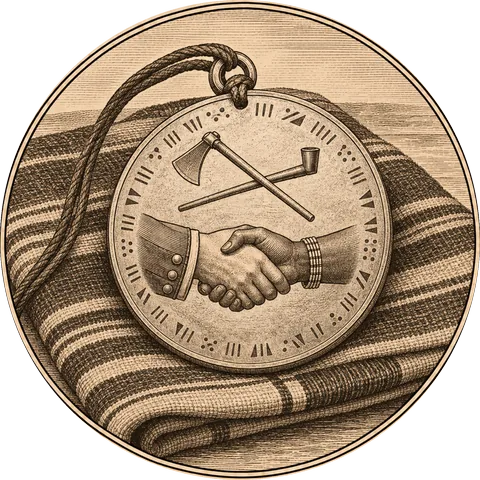
The Peace Medal
Chapter 3 · Council Bluff
A silver medal with Jefferson’s face on one side and, on the other, two clasped hands, a crossed tomahawk and pipe, and the words PEACE AND FRIENDSHIP. The captains hung medals round the necks of the men they decided to treat as chiefs. Some nations prized them. Others saw them as the first step in a claim on their land.
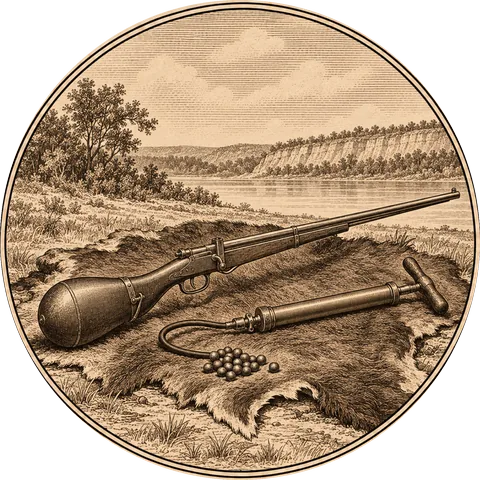
Lewis’s Air Rifle
Chapter 3 · Council Bluff
A rifle that fired using squeezed air instead of gunpowder. Pumped full, it could fire shot after shot with no smoke and hardly a sound. Lewis showed it off at council after council, and people who had never seen anything like it took it for powerful magic.
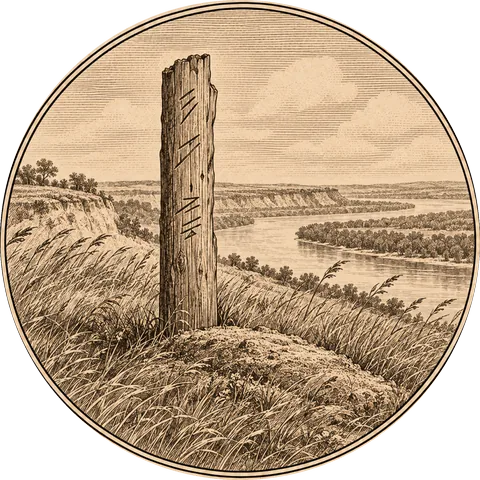
Floyd’s Cedar Post
Chapter 4 · Sergeant Floyd
The men buried Floyd on a bluff above the river and fixed a cedar post at the head of his grave, carved with his name and the date he died. River travellers pointed it out for years. Today a hundred-foot stone monument stands on the bluff.
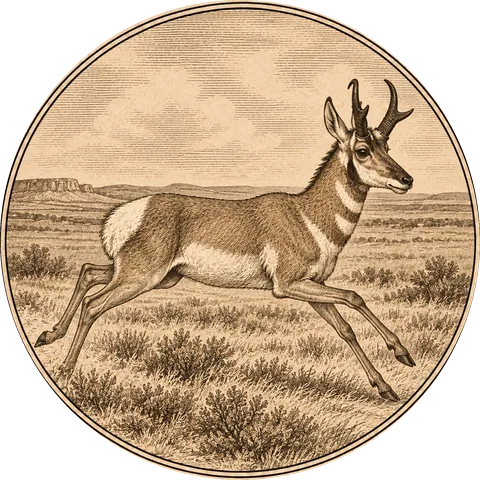
The Pronghorn
Chapter 5 · Lost in a Land of Plenty
Clark shot one on 14 September 1804 and called it a “Goat.” Lewis watched a herd run and wrote that it looked more like “the rappid flight of birds than the motion of quadrupeds.” It is the fastest animal in the Americas, and scientists had never described one before.
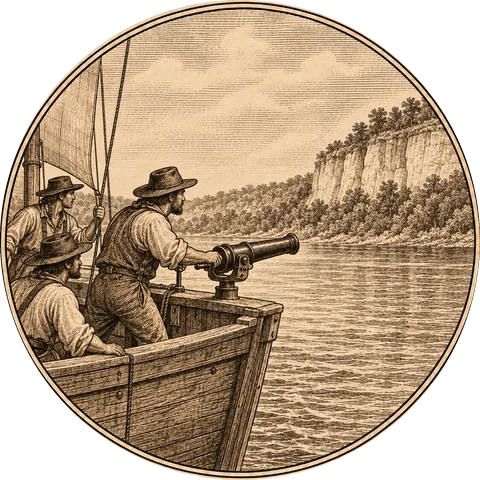
The Swivel Gun
Chapter 6 · The Teton Standoff
A small cannon mounted on a pivot at the front of the keelboat, so it could be swung to aim in any direction. It fired salutes on the Fourth of July and at Christmas. On 25 September 1804 it was aimed at a crowd of Lakota warriors, and never fired.
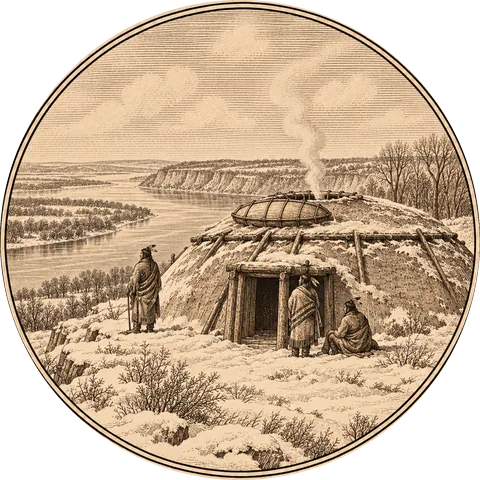
The Earth Lodge
Chapter 7 · The Mandan Villages
A round house as big as a barn, built on a frame of heavy timbers and covered with willow, grass and a thick layer of earth. Several families lived inside around a central fire, and in winter the best horses were kept in the entrance. The villages of earth lodges on the Knife River were the busiest trading place on the northern plains.
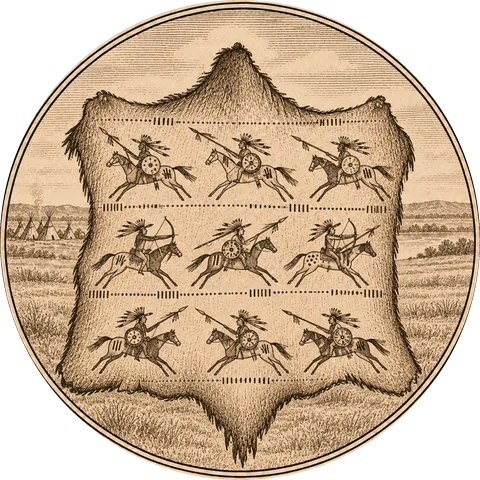
The Painted Buffalo Robe
Chapter 8 · Forty Below
A buffalo hide “painted by a mandan man representing a battle fought 8 years Since” against the Lakota and the Arikara, as the list sent to Jefferson describes it. A painted robe that is probably this one is kept today at Harvard University’s Peabody Museum, one of the oldest surviving examples of Plains painting.
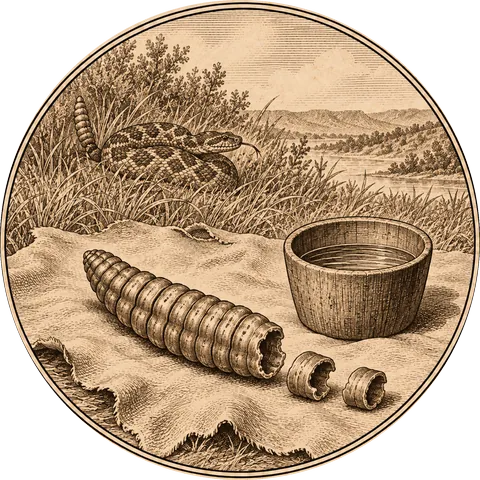
The Rattlesnake Rattle
Chapter 8 · Forty Below
When Sacagawea’s labour went on for hours, a trader told Lewis that a little crushed rattlesnake rattle, stirred into water, would speed things up. Lewis had one and gave it to him to try. The baby came about ten minutes later. Lewis was not convinced: he confessed that he “want[ed] faith as to it’s efficacy.”
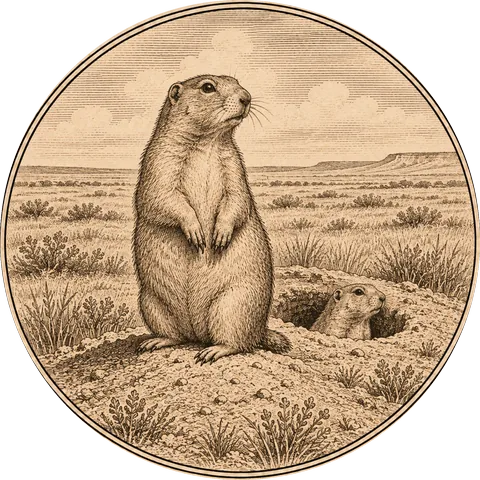
The Prairie Dog
Chapter 9 · Gifts for the President
Caught on 7 September 1804 by flooding its burrow, it spent the winter at Fort Mandan and went down the river in a cage in April 1805, listed as “a liveing burrowing Squirel of the praries.” It travelled thousands of miles by river and sea and was still alive when it reached the President’s House in Washington.
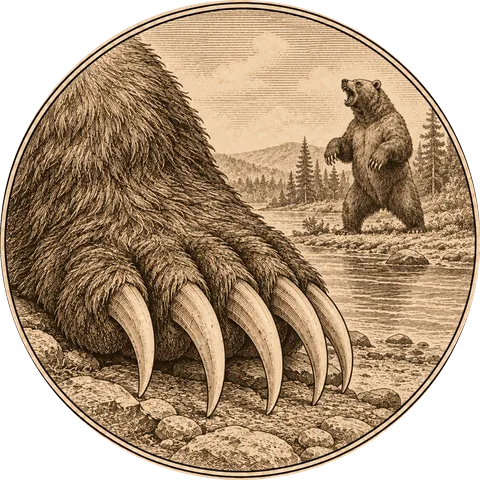
The Grizzly Claw
Chapter 10 · White Bears
The Mandan and Hidatsa had warned the captains about the great bear of the plains, which the journals call the white or brown bear because of its silver-tipped fur. The Corps sent skins, skulls and claws back east, and scientists described the grizzly from them. The name grizzly, meaning streaked with grey, came into use later.
The Elkskin Journal
Chapter 11 · The Journals Overboard
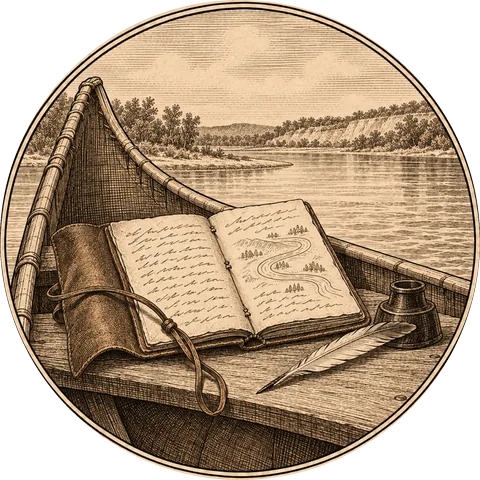
The captains wrote rough notes in small notebooks as they travelled and copied them out neatly later. One of Clark’s field notebooks, bound in elkskin, still survives. On 14 May 1805 most of their papers were in the white pirogue when it nearly sank.
The Cache
Chapter 12 · Which River?
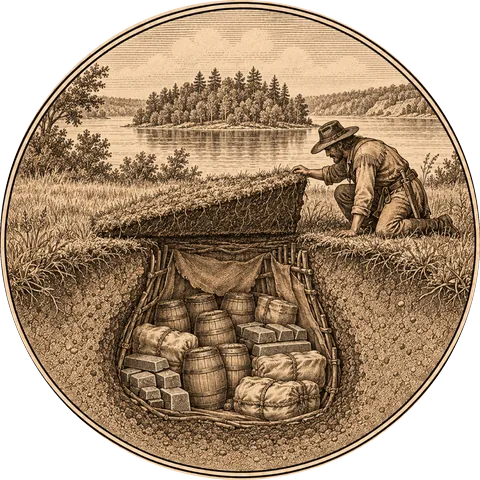
A hidden pit shaped like a kettle, dug by Pierre Cruzatte, lined with sticks and hides, filled with gunpowder, lead, tools and food, and covered over so the ground looked untouched. At the Marias the Corps buried several of these and hid the red pirogue on an island, to collect on the way home.
Clark’s Compass
Chapter 13 · The Great Falls
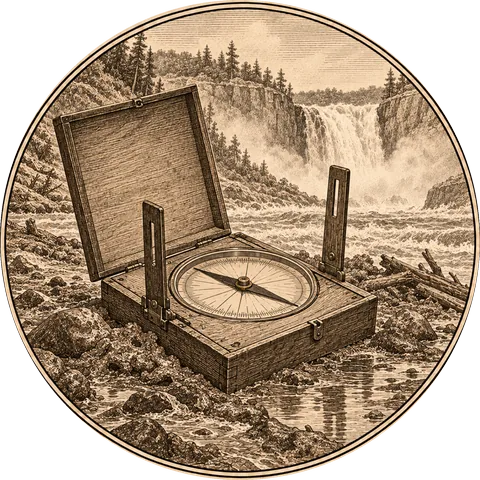
Clark’s big surveying compass was swept away when a flash flood filled the ravine where he was sheltering. “The Compass, is a serious loss,” he wrote, “as we have no other large one.” The next day two men found it “in the mud & stones near the mouth of the reveen.” A small compass Clark carried is kept today at the Smithsonian.
The Iron Boat
Chapter 13 · The Great Falls
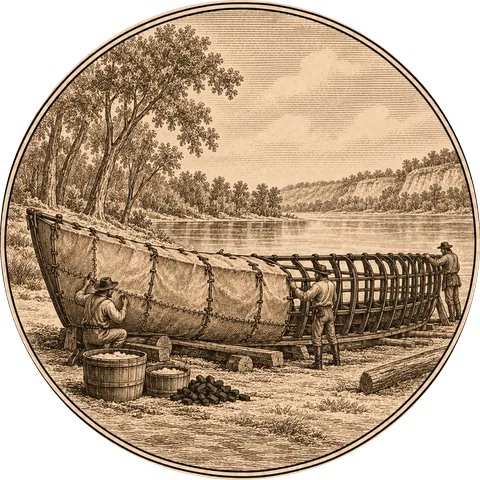
Lewis had an iron frame made at Harpers Ferry that could be taken apart, carried, and covered with animal skins to make a boat. At the Great Falls the men stitched on the hides, but there were no pine trees for tar to seal the seams, and it leaked. Lewis “relinquished all further hope of my favorite boat.”
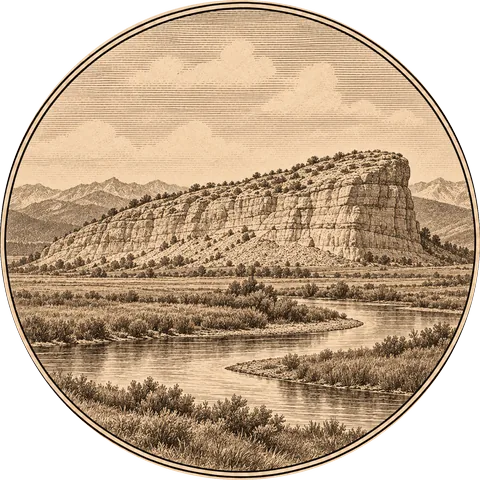
Beaverhead Rock
Chapter 14 · Three Forks
A hill beside the Jefferson River shaped like the head of a swimming beaver. On 8 August 1805 Sacagawea recognised it: “this hill she says her nation calls the beaver’s head,” Lewis wrote, and her people’s summer camps were not far beyond. It still stands beside the highway in southwest Montana.
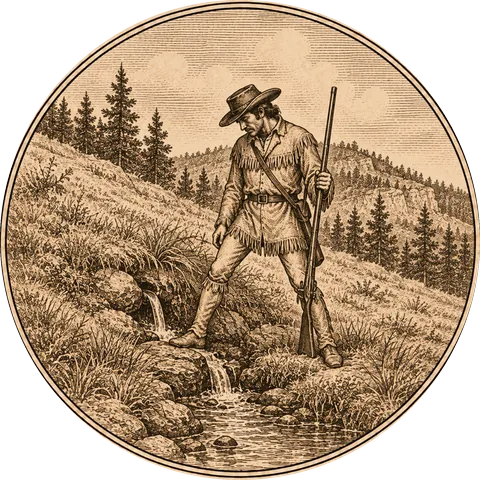
The Fountain of the Missouri
Chapter 15 · The Divide
A small spring on the east side of Lemhi Pass, which Lewis believed was “the most distant fountain of the waters of the Mighty Missouri.” A short walk further on, over the ridge, he drank from a cold creek running west, towards the Pacific.
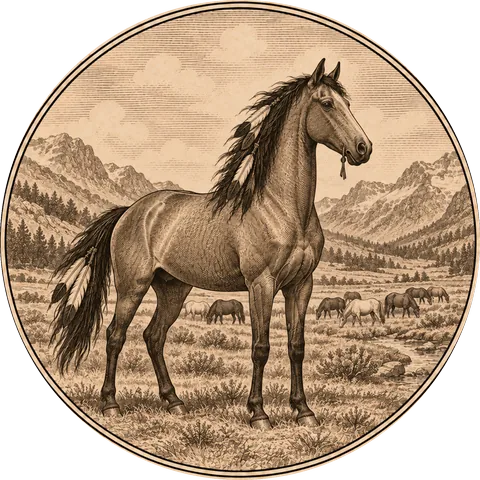
A Shoshone Horse
Chapter 16 · Cameahwait
The Shoshone were famous horse people, and their herds were the only way over the Rockies. The captains bought horses with knives, cloth, clothes and whatever else they could spare. Clark paid for his own with “my Pistol 100 Balls Powder & a knife.” They also hired an old Shoshone man they called Toby to guide them.
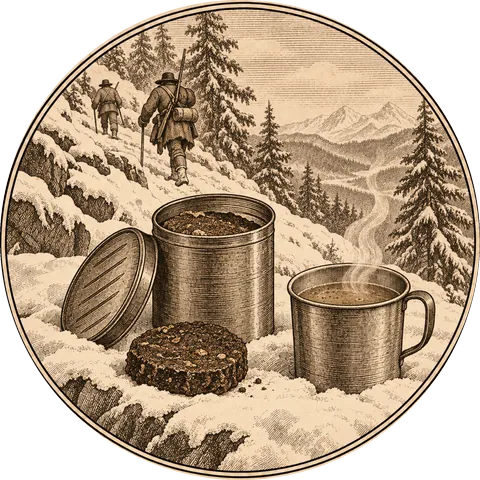
Portable Soup
Chapter 17 · The Starving Trail
Soup boiled down to a hard, dry cake, bought in Philadelphia in 1803 and carried for more than two years. Mixed with hot water it made a thin broth. On the Lolo Trail it was almost the only food the Corps had left.
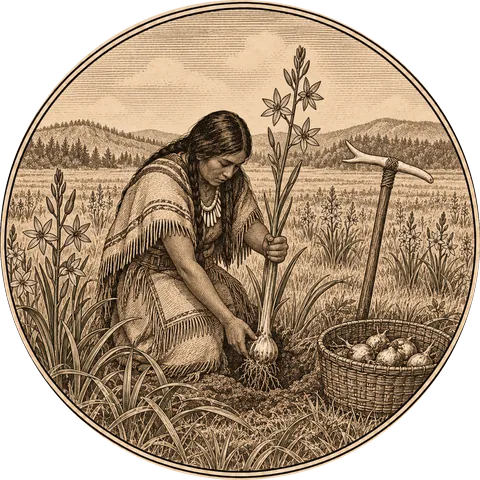
Camas Root
Chapter 18 · The Nez Perce
The bulb of a blue-flowered lily that covers the Weippe Prairie in spring. The Nez Perce dug it up, baked it slowly in pits, and made it into cakes and bread. It was one of their most important foods. The starving men ate so much of it, with dried salmon, that they were sick for days.
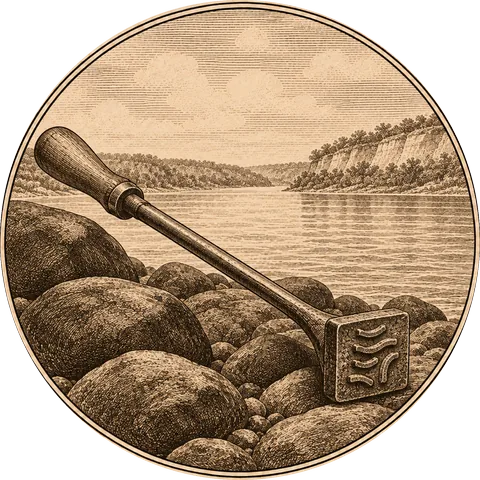
Lewis’s Branding Iron
Chapter 18 · The Nez Perce
An iron stamp reading “U.S. CAPT. M. LEWIS.” The Corps used it to mark trees and, in October 1805, the horses they left in Nez Perce care. It was found in the 1890s among the rocks on the north shore of the Columbia River near Celilo Falls, and today belongs to the Oregon Historical Society.
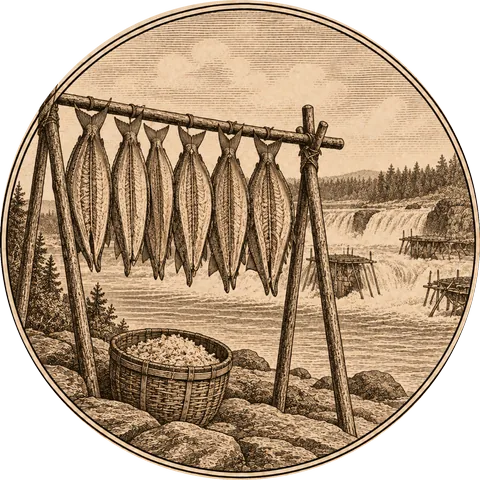
Dried Salmon
Chapter 19 · The Great River
Salmon were the wealth of the Columbia. Every autumn the villages along the river caught them by the thousand, split them, dried them on racks, and pounded them into a powder that kept for months and was traded far up and down the river. The Corps bought salmon, roots and dogs to eat all the way to the sea.
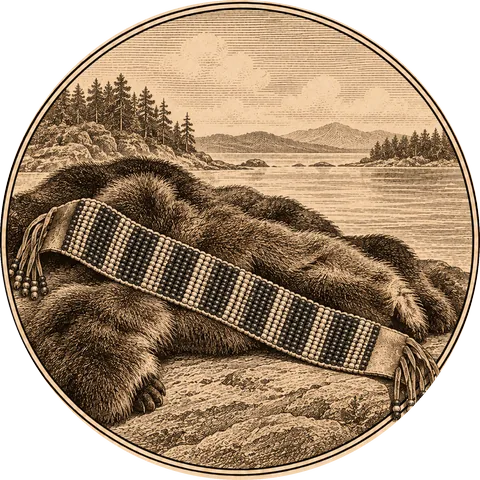
The Blue-Bead Belt
Chapter 20 · Ocian in View
Sacagawea’s belt of blue glass beads. On 20 November 1805 a Chinook man had a beautiful sea-otter robe that the captains wanted, and he would take nothing for it but blue beads. So they “purchased it for a belt of Blue Beeds which the Squar had.” Nobody wrote down what she thought about giving it up.
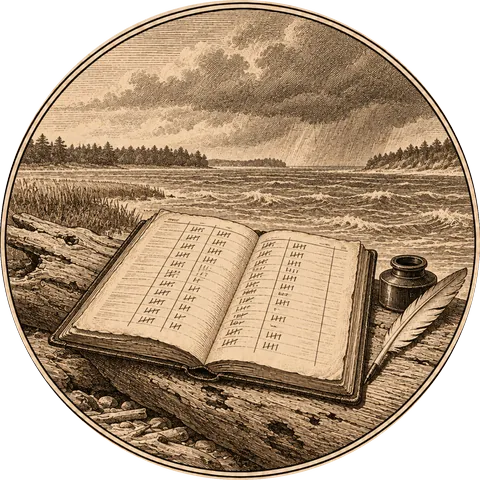
The Tally
Chapter 21 · The Vote
The page where Clark wrote down everyone’s choice, man by man: cross the river and look, go back to the Sandy River, or go back up to the falls. Near the bottom are York’s vote, and Sacagawea’s, written as “Janey,” for “a place where there is plenty of Potas,” meaning wapato, a root like a potato that grew along the river.
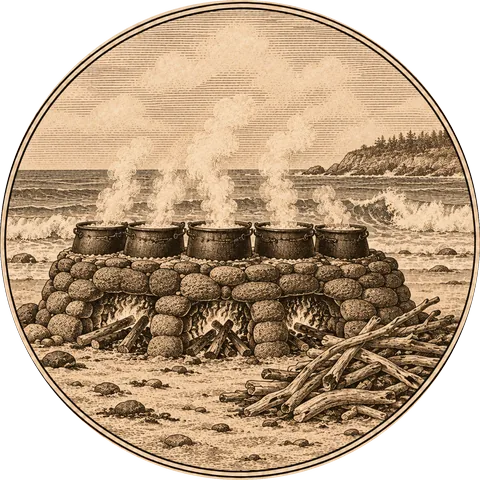
The Salt Cairn
Chapter 22 · Fort Clatsop
A stone oven on the beach at present-day Seaside, Oregon, where a small team of men took turns boiling seawater in kettles day and night. They made “from 3 quarts to a gallon a day” of salt, enough to season their elk meat on the journey home. A copy of the cairn stands on the spot today.
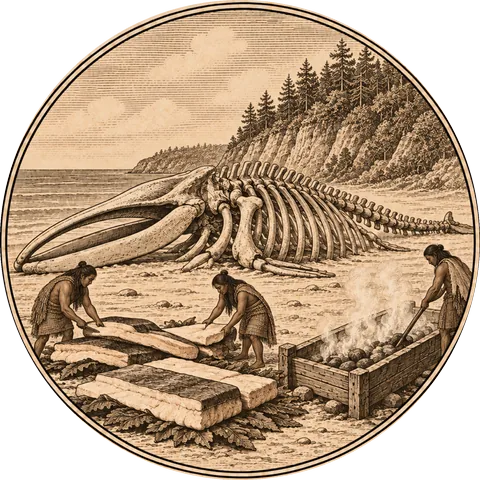
Whale Blubber
Chapter 23 · The Great Fish
The thick layer of fat under a whale’s skin. The Tillamook people boiled it down for oil and traded the rest. Clark bought about three hundred pounds of it and a few gallons of oil. Lewis, who had tasted some, thought it “resembled the beaver or the dog in flavour.” “Small as this stock is,” Clark wrote, “I prise it highly.”
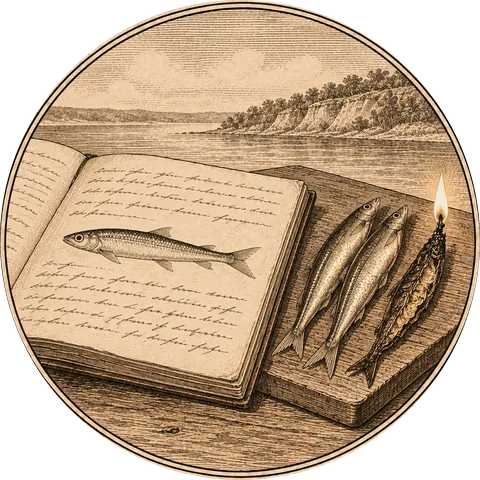
The Candlefish Sketch
Chapter 23 · The Great Fish
A small, silvery fish that swims up the rivers in huge numbers every spring. It is so oily that, dried, it can be lit and burned like a candle. Lewis drew it in his journal and wrote, “I think them superior to any fish I ever tasted.” Today it is called the eulachon.
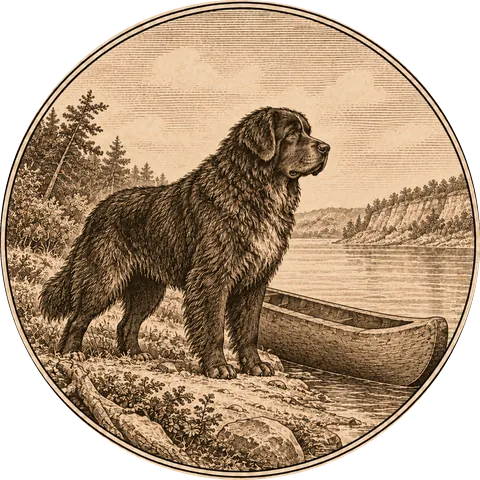
Seaman
Chapter 24 · Homeward
Lewis’s big Newfoundland dog, who went all the way to the Pacific and back. He caught squirrels and geese, was badly bitten by a beaver and nearly died, and barked through the night when grizzlies came near the camp. Lewis named a creek after him. Nobody knows what became of him after the journey.
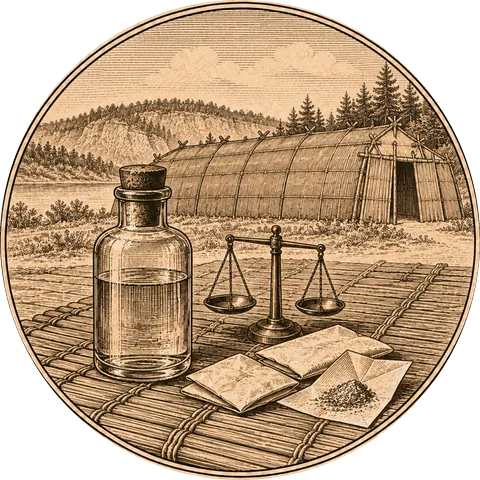
Clark’s Eye-Water
Chapter 25 · Waiting for the Snow
A simple eye wash that Clark mixed from the expedition’s medicine chest. Many Nez Perce suffered from sore eyes, and Clark’s treatments became so popular that people travelled long distances to see him. Lewis wrote that “my friend Capt. C. is their favorite phisician,” and his patients paid in food, which the Corps badly needed.
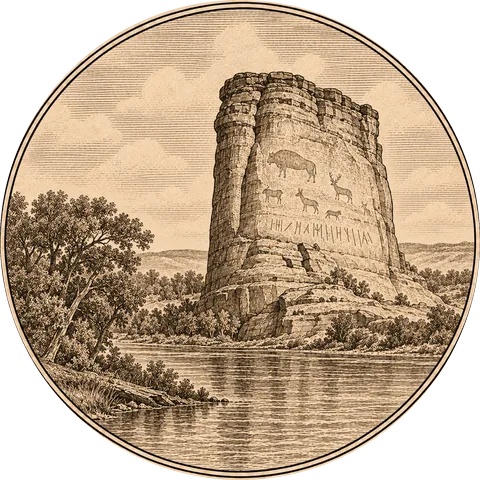
Clark’s Name in Stone
Chapter 26 · Two Roads Home
“Wm Clark July 25 1806,” scratched into the sandstone of Pompeys Pillar beside much older Native carvings of animals. It is the only mark left by the expedition that can still be seen where it was made, and it is protected behind glass today.
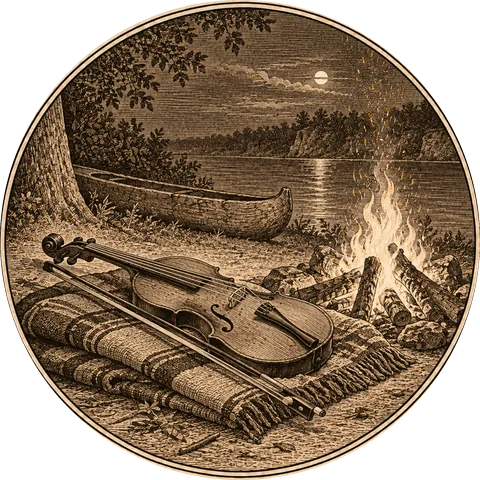
Cruzatte’s Fiddle
Chapter 28 · The Fiddler’s Shot
Pierre Cruzatte, a river man whose mother was Omaha and whose father was French, played the fiddle all the way across the continent and back: at Christmas and New Year, for the Mandan and the Walla Walla, and on the nights when the men needed cheering up. He was also the best boatman in the Corps.
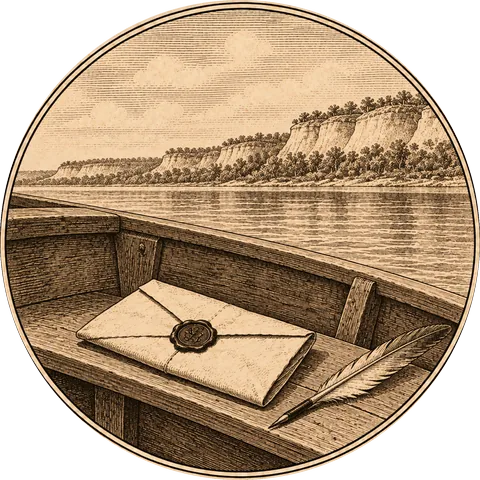
Clark’s Letter to Charbonneau
Chapter 29 · Farewells
Written by Clark from his boat three days after they parted. It repeats his offer to raise and educate Pomp, and admits a debt he could not repay: Sacagawea “diserved a greater reward for her attention and services on that rout than we had in our power to give her.”
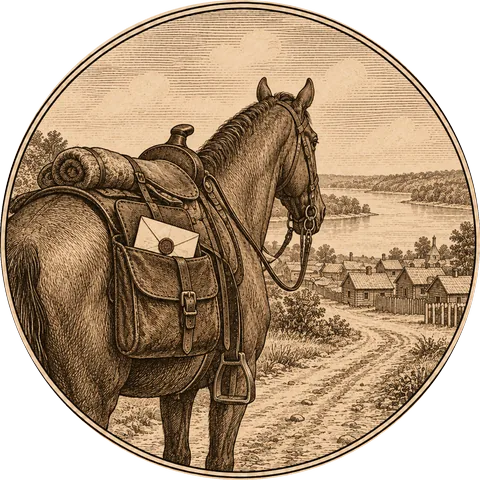
Lewis’s Letter to Jefferson
Chapter 30 · St. Louis
Written the day they reached St. Louis and rushed east by post rider: “It is with pleasure that I anounce to you the safe arrival of myself and party at this place … with our papers and baggage.” It was the first news Jefferson had had of the expedition for well over a year.
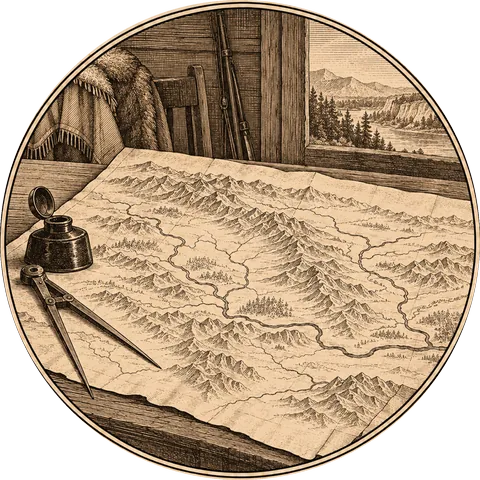
Clark’s Map
Chapter 31 · After
The great map Clark drew from the expedition’s measurements, published in 1814 as “A Map of Lewis and Clark’s Track Across the Western Portion of North America.” For the first time it showed the real shape of the West, with the Rocky Mountains as range after range instead of a single ridge. Mapmakers copied it for decades.