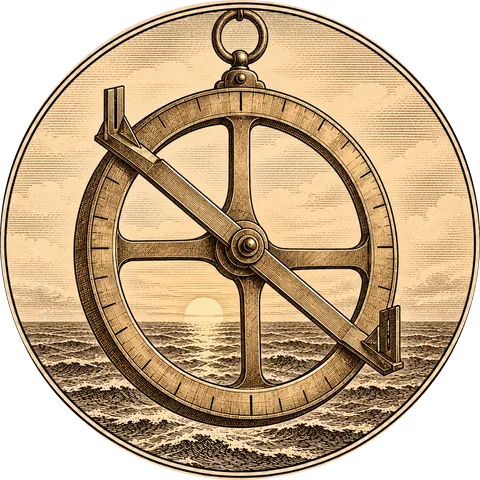
The Pilot’s Astrolabe
Chapter 1 · The Boy Who Came Home
A heavy brass ring hung from the hand, with a sighting arm across it. Pilots used it to measure how high the sun stood at noon, and from that their latitude: how far north or south of the equator they were. There was no way yet to measure longitude, how far east or west, which is why pilots so often argued about where they were. Urdaneta learned his navigation in the Spice Islands and came home one of the best pilots of his time.
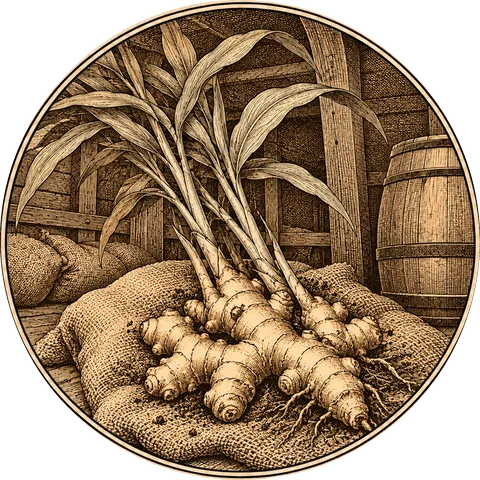
Ginger Root
Chapter 2 · Felipinas
Among the few survivors of Villalobos’s expedition was its accountant, Guido de Lavezaris. On his way home through India he picked up roots of ginger and carried them to Mexico, where, he later wrote, it “has grown so well.” Twenty years later he sailed to the islands again with Legazpi, and in the end he took Legazpi’s place.
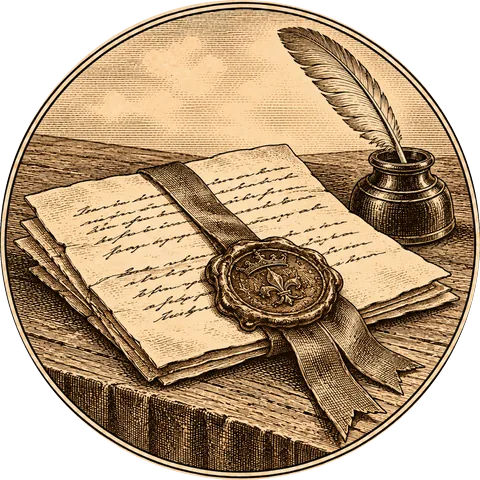
The King’s Letter
Chapter 3 · The King’s Letter
On 24 September 1559 King Felipe II wrote from Valladolid to his viceroy in Mexico, Luis de Velasco, ordering him to send two ships “for the discovery of the western islands toward the Malucos.” They were to bring back a little spice, but that was not the point. “The principal reason of this expedition,” the king wrote, “is to ascertain the return voyage.”
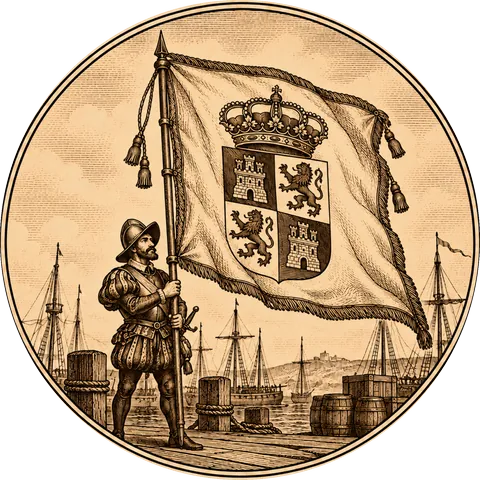
The Royal Standard
Chapter 4 · Navidad
On 19 November 1564, two days before sailing, the fleet’s banner and royal standard were blessed at Navidad, and every man swore to obey Legazpi and follow his flag. The standard sailed in the flagship and went ashore wherever the king’s possession was taken.
The Sealed Orders
Chapter 5 · The Sealed Orders
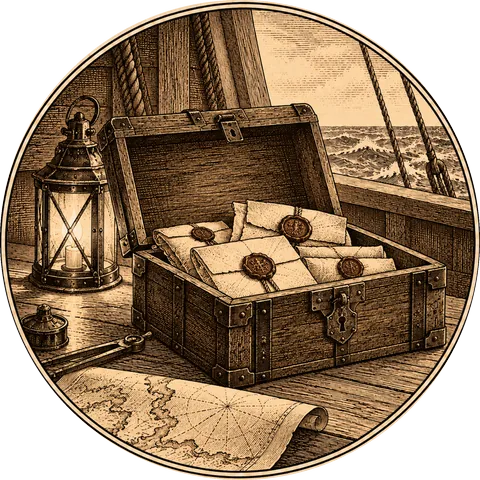
The orders of the Audiencia of Mexico, sealed and handed to Legazpi with instructions not to open them until the fleet was at sea. They sent the expedition to the Philippines by Villalobos’s route, and made the return voyage, with Urdaneta aboard, “the chief thing attempted.”
A Palm-Leaf Mat
Chapter 6 · The Bearded Men’s Island
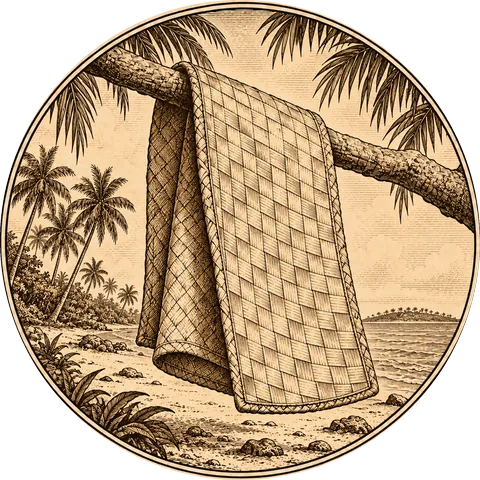
On the island the Spaniards called Barbudos, the people wore “garments made of palm-leaf mats, which are very thin and skilfully made.” Mats woven from pandanus and palm leaves were clothing, bedding and sails across the Pacific islands; the sails of the canoes the fleet met at Guam were made the same way.
A Nail for Rice
Chapter 7 · The Island of Sails
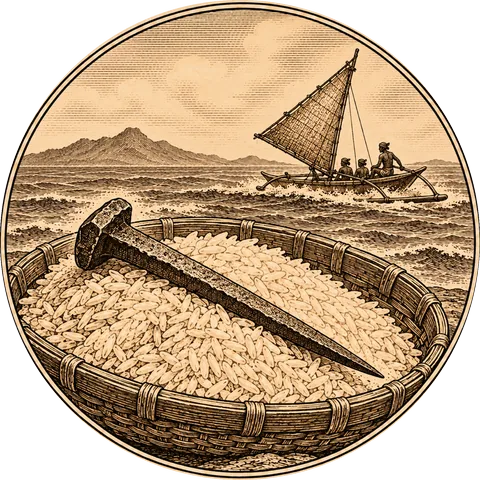
At Guam the Chamorro traded rice, yams, coconuts, bananas and ginger from their canoes. They were pleased with old playing cards and scraps of cloth, but once the Spaniards offered nails, Legazpi wrote, “they desired nothing else.” They smelled each nail before they took it, and gave about half a fanega of rice, more than twenty kilograms, for one. Iron was precious on islands that had none.
The Act of Possession
Chapter 8 · These Felipinas
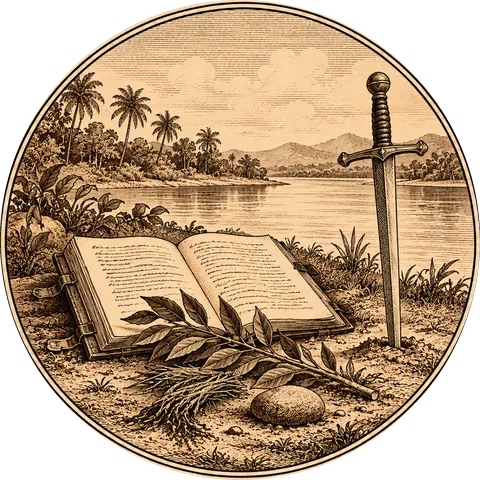
On 15 February 1565 the fleet’s notary, Hernando Riquel, wrote down how Spain took possession of Cibabao. The ensign Andrés de Ybarra went ashore with a chief called Calayan, walked from one end of the place to the other, “cut branches of trees, plucked grass, threw stones,” and declared the land the king’s. The people watching had no way of knowing what the ceremony meant.
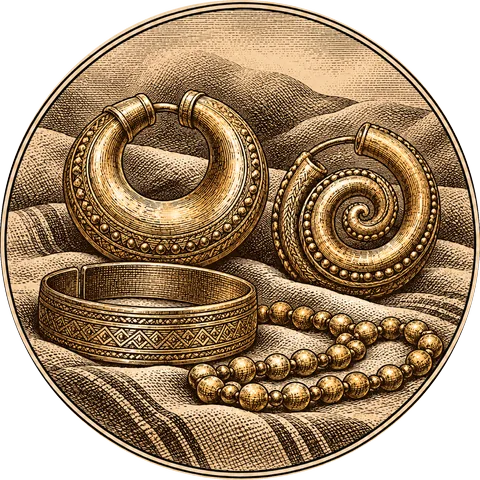
Gold Earrings
Chapter 9 · Looking for Friends
At Cabalian, on the southern tip of Leyte, Goiti’s men saw people wearing golden jewels, and pigs and chickens near the shore. All over the Visayas the Spaniards met gold: earrings, armlets, the chiefs’ anklets. What they did not find was anyone willing to sell them food.
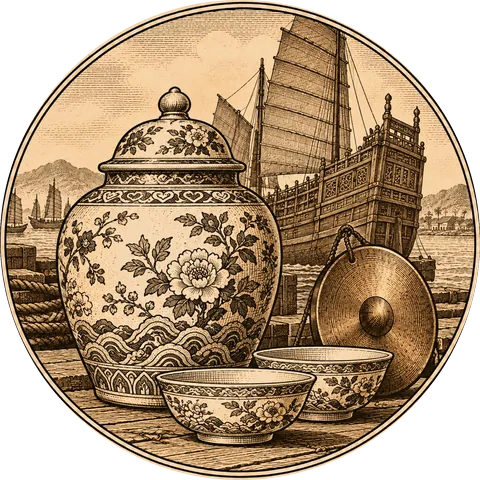
Porcelain from the Junk
Chapter 10 · The Junk from Borneo
The junk captured off Bohol carried the trade of half of Asia: iron and tin from Borneo; porcelain and copper bells from China; benzoin, a fragrant resin; painted cloth; and iron pans and pots from India. Chinese porcelain was already old in the islands in 1565. People traded for it, ate from it, and buried their dead with it.
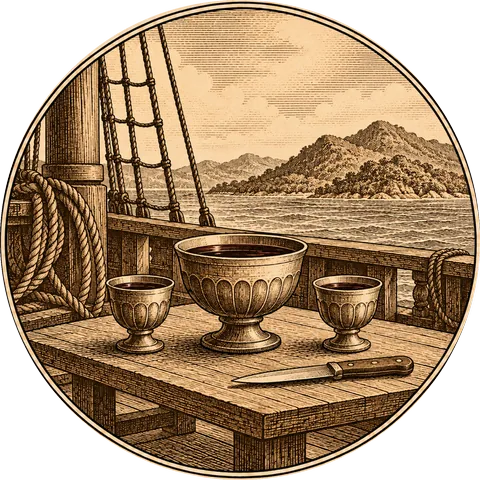
The Blood Cup
Chapter 11 · The Blood Compact
Legazpi described the ceremony of blood-friendship: each side drew “two or three drops of blood from his arm or breast,” and mixed them in one cup with water or wine. The mixture was divided between two cups, and neither man could leave until both were drained. It was considered unbreakable.
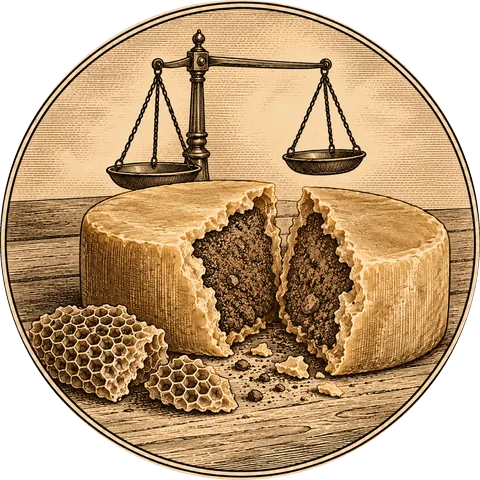
A Cake of Wax
Chapter 12 · The Frigate Comes Back
At Butuan, traders from Luzon sold the Spaniards beeswax, a valuable cargo used for candles. When the cakes were broken open, some had earth packed inside to make them heavier. The soldiers wanted to seize the traders’ junks in revenge. Their officers stopped them.
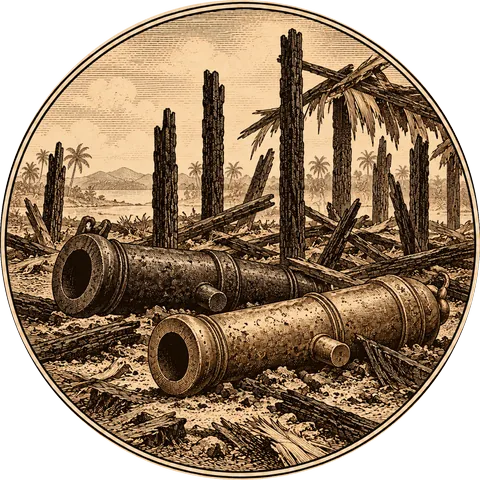
Two Old Guns
Chapter 13 · Tupas Will Not Come
In the abandoned houses of Cebu the Spaniards found two small cannon, one of iron and one of bronze, “which can be of no service to us; it is believed that they were brought here at the time of Magallanes.” If so, the people of Cebu had kept them for forty-four years.
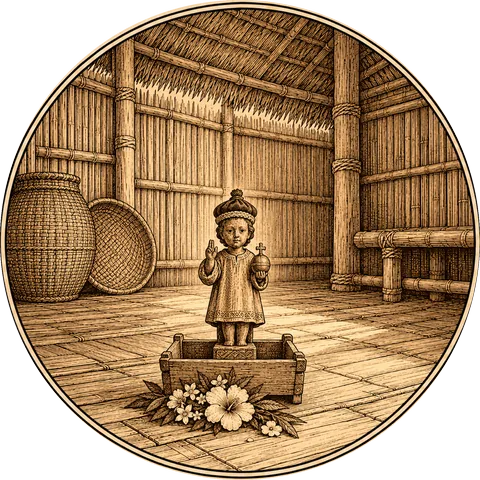
The Santo Niño, Found Again
Chapter 14 · The Child in the Cradle
A small carved image of the Christ Child, made in Flanders, in a little pine cradle, with a loose shirt and a velvet cap. Magellan gave it to the queen of Cebu at her baptism in April 1521. Forty-four years later it was found in a house in the burned town, with flowers placed before it. It is the oldest Christian image in the Philippines.
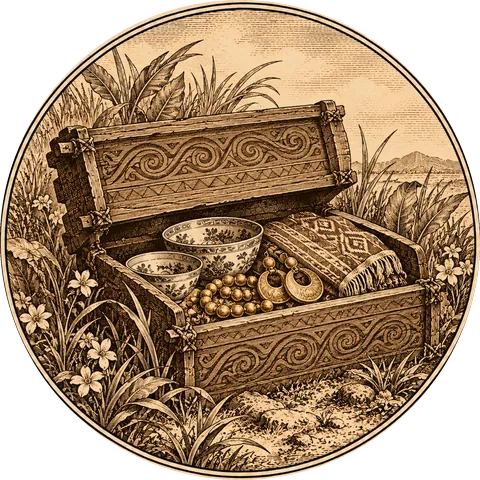
Gold from the Graves
Chapter 15 · San Miguel
The people of Cebu buried their dead with porcelain, fine clothes and gold. Spanish soldiers dug some of it up. On 16 May 1565 Legazpi proclaimed that all gold taken from graves had to be declared, so that the king could have his fifth. The soldiers called it treasure. To the people of Cebu it was their ancestors’ property.
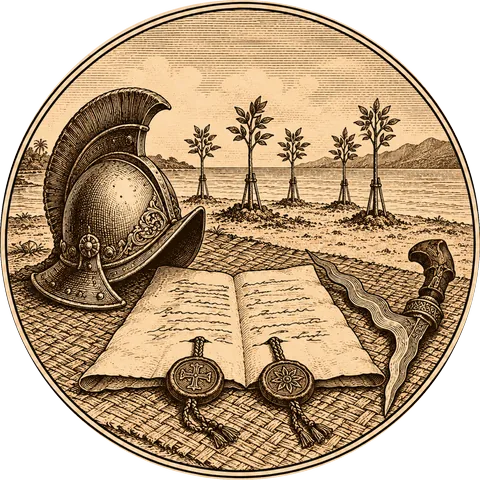
The Treaty of Cebu
Chapter 16 · The Treaty
The terms agreed on 4 June 1565 between Legazpi and Tupas: the people of Cebu became vassals of the king of Spain; each side would help the other against its enemies and share the spoils; a Spaniard who wronged a Cebuano would be punished, and a Cebuano who wronged a Spaniard handed over; prices would be fixed; and no one could enter the Spanish camp armed. It was the first treaty between Spain and a people of the Philippines.
The San Pedro
Chapter 17 · North for the Wind
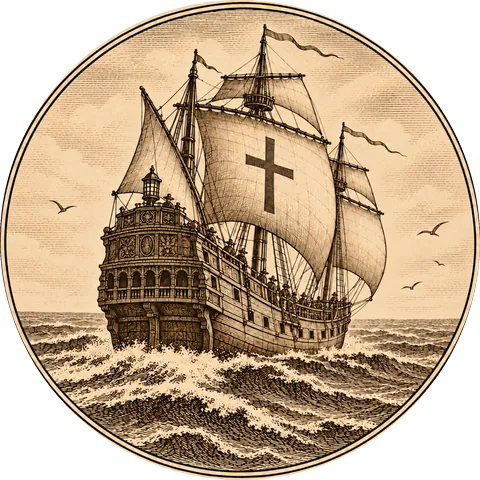
Legazpi’s flagship, chosen to go home because she was the lightest and best sailer of the fleet. With about two hundred people aboard and food for eight months, she sailed from Cebu on 1 June 1565 under Felipe de Salcedo, with Urdaneta to guide her. Her crossing opened the route that Spain’s galleons would follow for two hundred and fifty years.
The San Lucas
Chapter 18 · Thirty-Nine Degrees
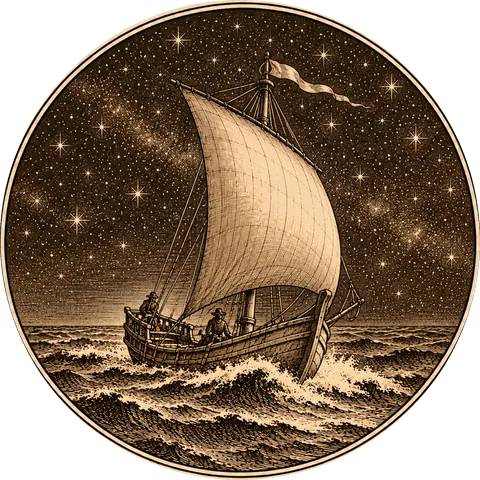
The small, fast patache that vanished from Legazpi’s fleet on its sixth night at sea. Its captain, Alonso de Arellano, and pilot, Lope Martín, sailed on to Mindanao, then turned for home and reached Navidad on 9 August 1565, two months before the *San Pedro*. Arellano claimed he had searched for the fleet. Legazpi had him and his pilot charged with desertion.
The Chief Pilot’s Chart
Chapter 19 · Acapulco
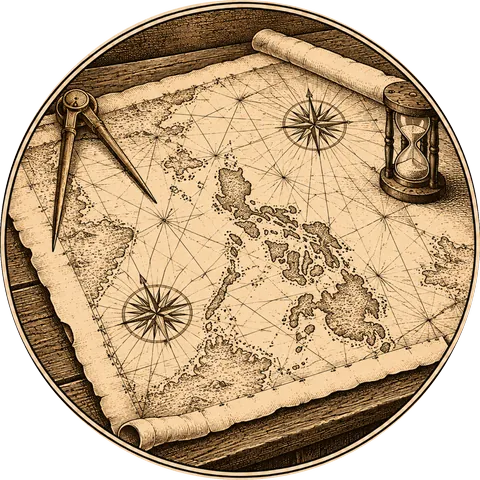
Esteban Rodríguez, chief pilot of Legazpi’s fleet, kept the chart that measured the way home: eighteen hundred and ninety-two leagues from Cebu to Navidad, more than ten thousand kilometres. He died at sea on 27 September 1565, ten days before the *San Pedro* reached Acapulco.
Palm Wine
Chapter 20 · Hungry Months
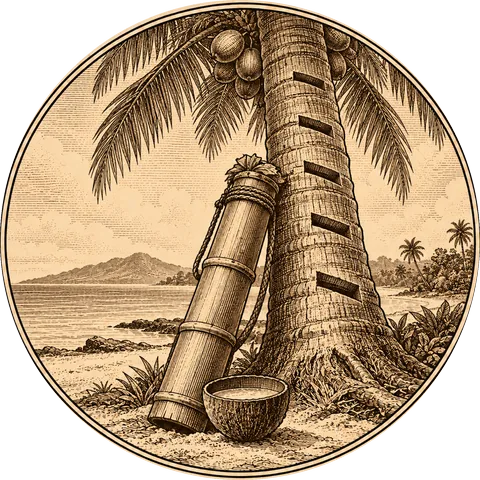
*Tuba*, wine made from the sap of the coconut or nipa palm. The people of Cebu sold it to the Spaniards, who drank it “with good appetite, saying that they did not miss the wine of Castilla.” Legazpi banned it from the camp, and the soldiers bought it anyway, “secretly and at night.”
The Comet
Chapter 21 · The Ship of Mutineers
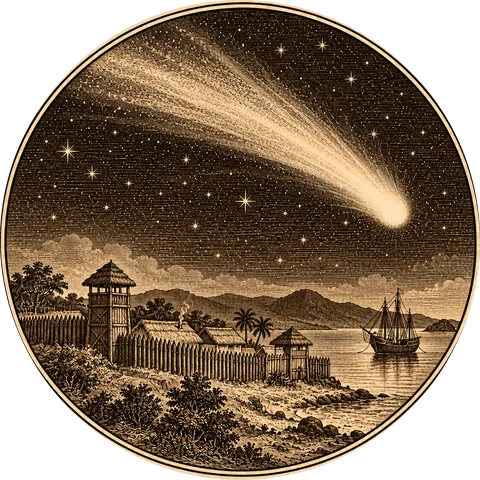
In November 1566, just after two Portuguese ships had come and gone, a comet appeared “nearly above the town of Zebu.” The soldiers took it as a sign of war and bloodshed. For once, the omen was wrong: there was no fighting that year.
A Bale of Cinnamon
Chapter 22 · Cinnamon for the King
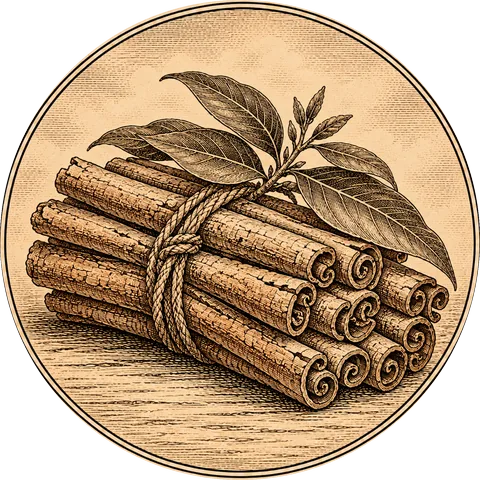
Cinnamon bark from the coast of Mindanao, the one spice the Spaniards found in the Philippines. Legazpi sent quintals of it to Spain in 1567 and 1568, hoping it would prove the islands worth keeping. When fifteen or sixteen soldiers died on a voyage to the cinnamon coast, the camp’s physician blamed it on “eating too much cinnamon.”
Pereira’s Demand
Chapter 23 · Pereira’s Galleys
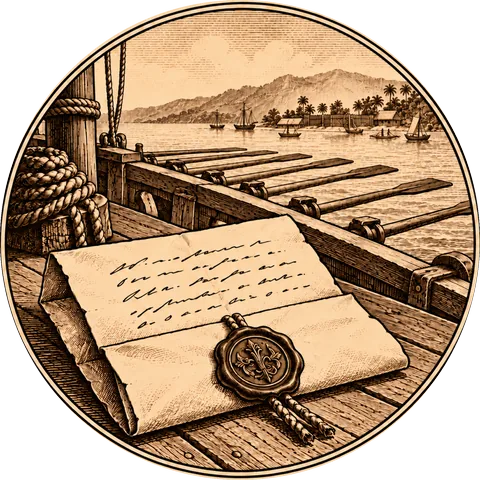
On 14 October 1568, aboard his galley *San Francisco* in the harbour of Cebu, the Portuguese commander Gonzalo Pereira wrote out a formal demand that Legazpi show his commission or leave “this land and archipelago of ours forthwith, with all his camp, fleet, and munitions of war.” His notary delivered it the next afternoon. Legazpi stayed.
Chinese Silk
Chapter 24 · Mindoro
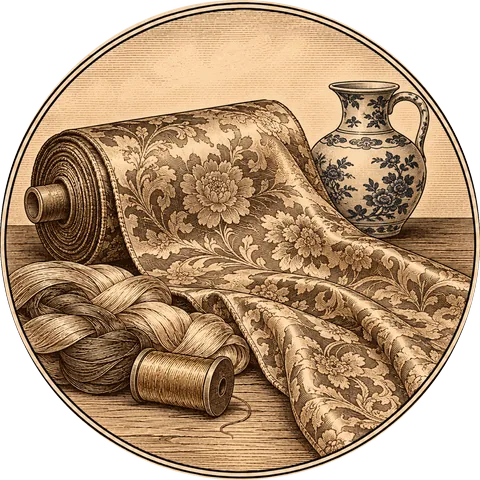
In the cabins of the Chinese junks at Mindoro the Spaniards found silk, woven and in skeins, gold thread, musk, gilded porcelain bowls and water jugs, cotton cloth, and fine porcelain jars. It was a small cargo, they thought, for such big ships. Within a few years silk like this would fill the galleons sailing from Manila to Acapulco.
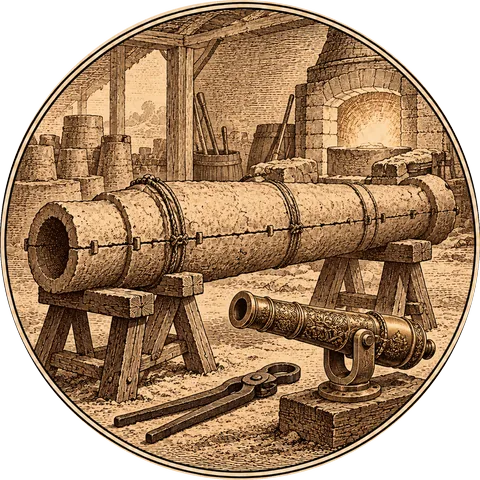
A Cannon Mould
Chapter 25 · Rajah Sulayman
Beside Rajah Sulayman’s house in Maynila stood a store full of iron and copper, guns, and half-made cannon, with moulds of clay and wax. The largest was for a gun seventeen feet long. The people of Manila Bay cast their own bronze cannon, the *lantaka*, and their gunfounders were famous in the islands.
A War Boat
Chapter 26 · Lakandula
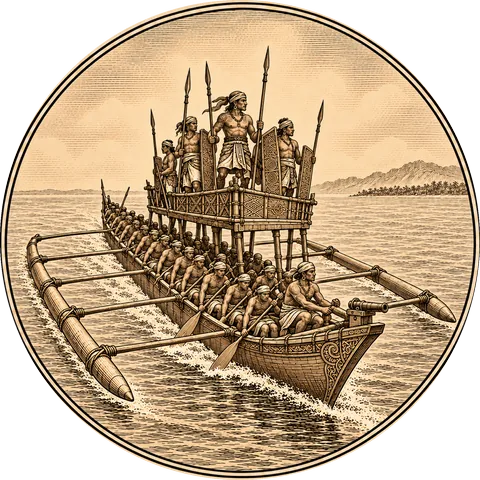
The towns of the islands went to war in long, fast boats driven by many paddlers, with a fighting platform above them and, in the Manila Bay towns, small bronze guns on board. At Bangkusay, on 3 June 1571, twenty or thirty of them came out against the Spaniards, firing their culverins and arrows.
The City’s Founding
Chapter 27 · The City
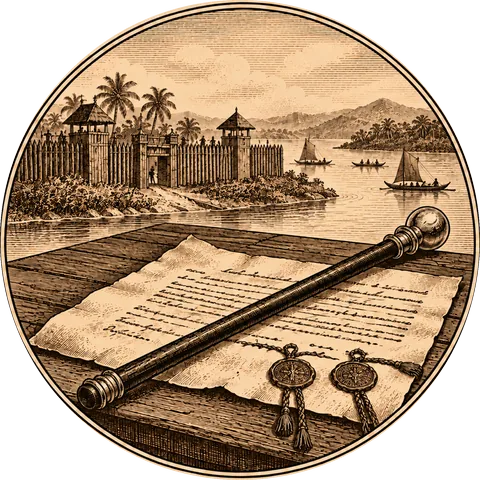
On 19 June 1572 the notary Hernando Riquel certified that Legazpi “gave the title of city to this colony of Manila, on the third day of the month of June” 1571, and on St John’s Day, 24 June, appointed its first council. Manila still keeps 24 June as its founding day.
The Governor’s Chest
Chapter 28 · The Governor’s Chest
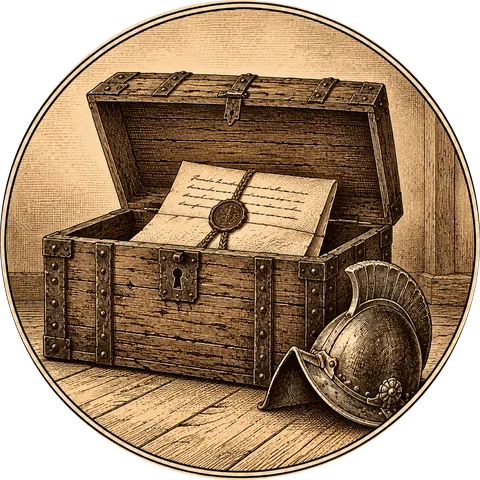
When Legazpi died, his officers opened his chest and found the king’s decree naming him governor and captain-general of the islands, sent from Spain in 1569. It had reached him only in 1570, five years after he founded Cebu.