Pigafetta’s Pen
Chapter 1 · The Gentleman from Vicenza
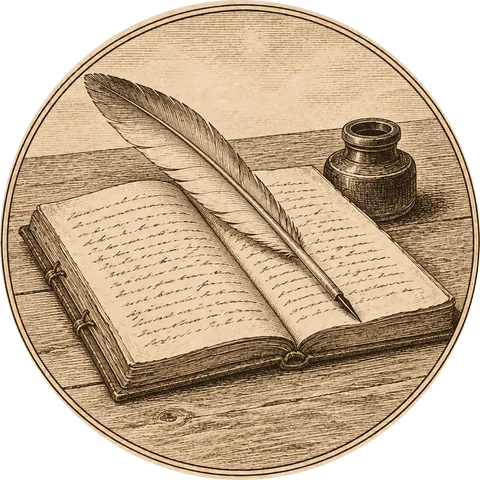
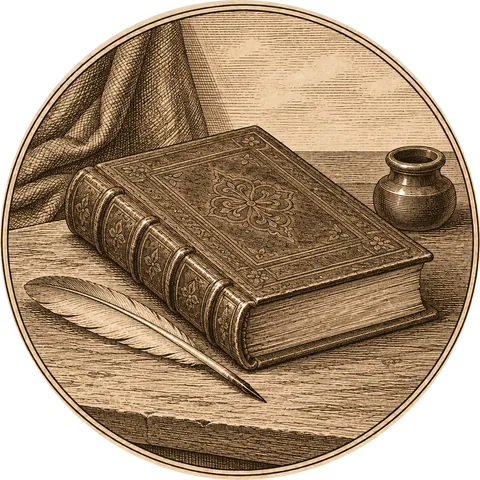
A gentleman’s quill. Pigafetta was not a sailor, a soldier or an officer; he came along to watch and to write. Nearly everything we know about life aboard Magellan’s fleet comes from what this pen set down over three years.
The Cloud Tree
Chapter 2 · Islands of Cloud
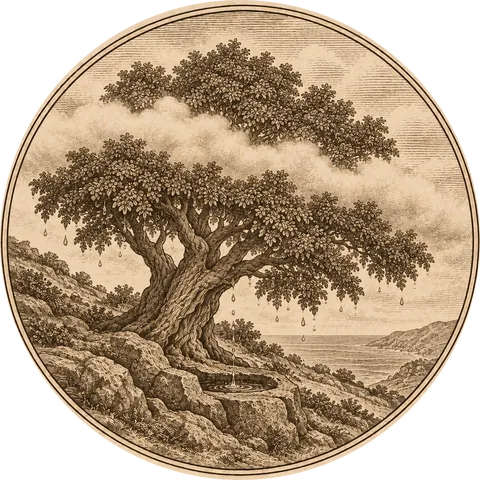
The Garoé of El Hierro, a tree that drank from the clouds. On an island with no springs, the islanders collected the water that dripped from its leaves, and it kept people and animals alive. Pigafetta thought it a marvel. It was real.
St. Elmo’s Fire
Chapter 3 · Sixty Days of Rain
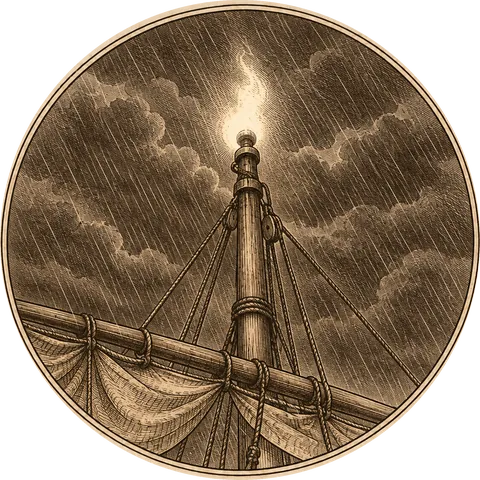
A glow on the masthead in the worst of the storms, which sailors took for their patron saint come to save them. It is an electrical discharge in stormy air. Pigafetta saw it again and again, and every time he took comfort from it.
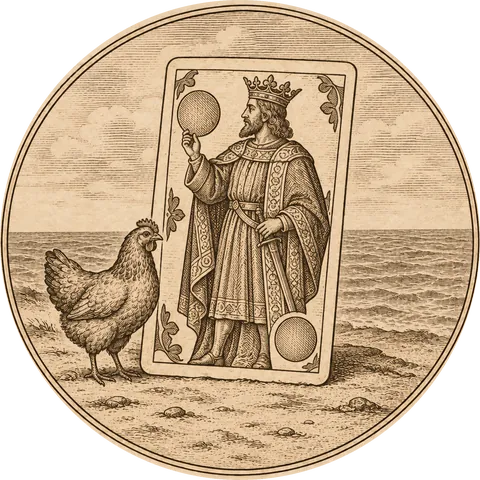
The King of Diamonds
Chapter 4 · The Land of Verzin
One playing card bought Pigafetta six chickens at Rio, and the sellers thought they had the better deal. A fishhook bought five or six more. It is the first of many trades he recorded, and he enjoyed the joke on both sides.
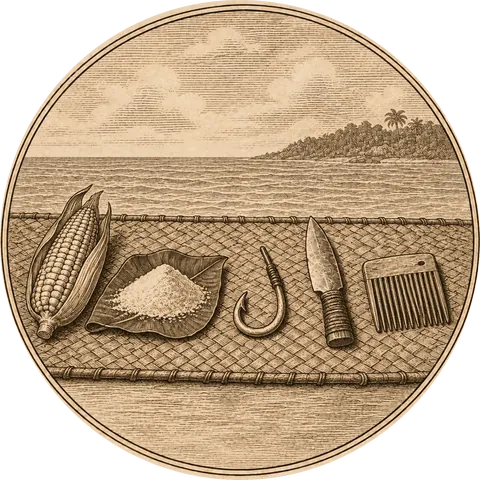
The First Word List
Chapter 4 · The Land of Verzin
Maiz, hui, pinda, tacse, chigap: millet, flour, fishhook, knife, comb. At Rio, Pigafetta began writing down the words of the people he met. He kept at it for three years, and his lists are among the earliest written records of languages from Patagonia to the Moluccas.
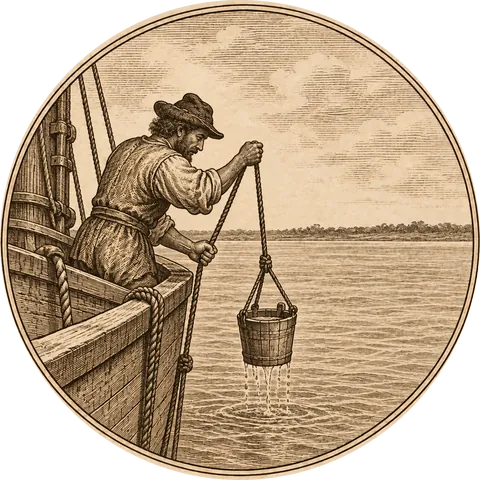
Fresh Water
Chapter 5 · The River of Solís
The moment the hoped-for passage died at the River Plate: the water alongside the ships was fresh. It was not a strait but the mouth of an enormous river, and the fleet would have to search much farther south.
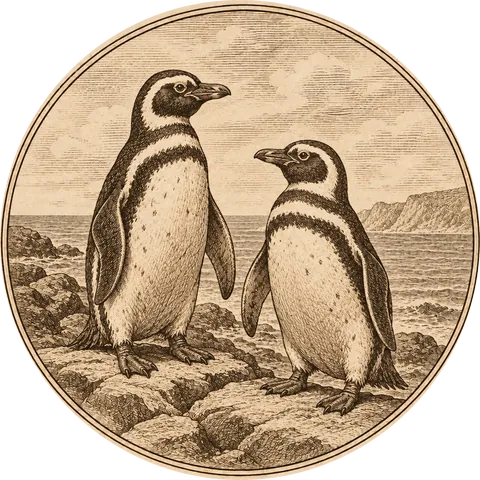
The Goose That Could Not Fly
Chapter 6 · Geese and Sea-Wolves
Black, fat and flightless, they lived on fish, and the crews filled five ships with them in an hour. Pigafetta called them geese. His account is one of the earliest European descriptions of penguins.
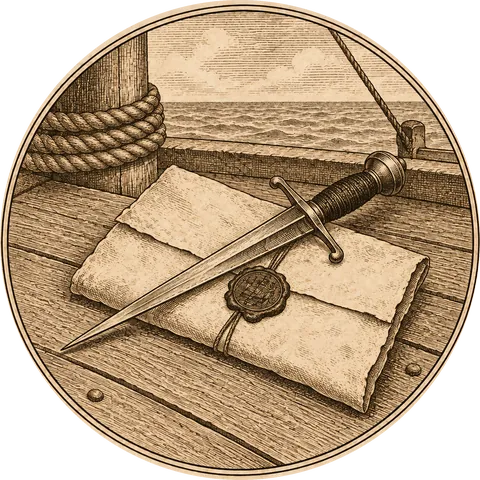
Magellan’s Summons
Chapter 7 · Port San Julián
The letter Espinosa carried across the harbour to the mutineer Luis de Mendoza. Mendoza smiled as he read it, and Espinosa stabbed him. The letter was a trick, and it broke the mutiny at Port San Julián in a single morning.
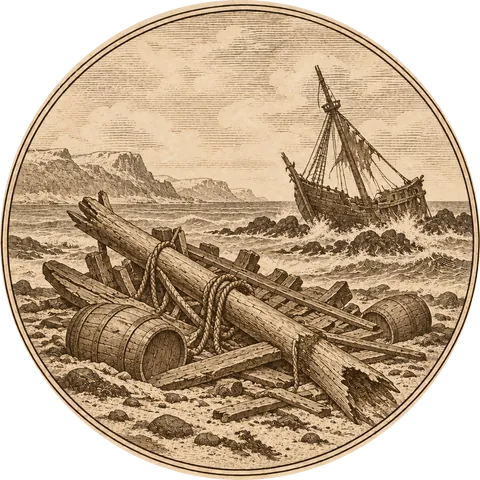
The Santiago’s Timbers
Chapter 8 · The Wreck of the Santiago
The first ship lost. The little scout Santiago was driven ashore at the mouth of the Santa Cruz river in May 1520. Every man survived, and for weeks they lived on the planks and stores that washed up from the wreck.
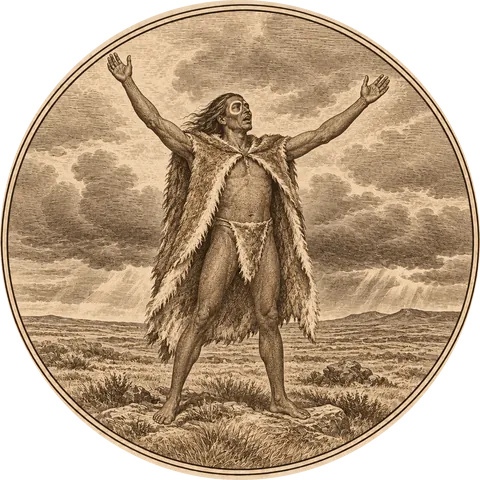
Setebos
Chapter 9 · The Giants
The great spirit of the Patagonians, whom Pigafetta’s captive called on at the sight of the cross. The name travelled from Pigafetta’s word list into an English translation, and from there to Shakespeare: in The Tempest, Caliban swears by Setebos.
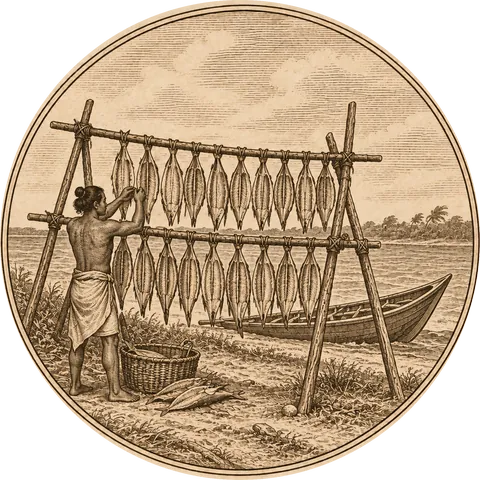
Dried Fish
Chapter 10 · The River of Santa Cruz
Two months at the river of Santa Cruz, catching and drying fish for the unknown ocean ahead. It was the last food they would lay in before the Pacific, and it was not nearly enough.
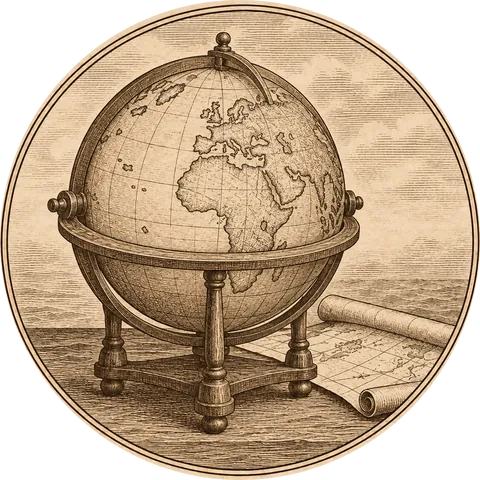
Behaim’s Map
Chapter 11 · The Eleven Thousand Virgins
Pigafetta claimed Magellan knew the strait was here from a map by Martin Behaim, locked in the king of Portugal’s treasury. No such map has ever been found. Perhaps it existed, perhaps it was a guess, or perhaps Magellan simply wanted his men to believe he knew.
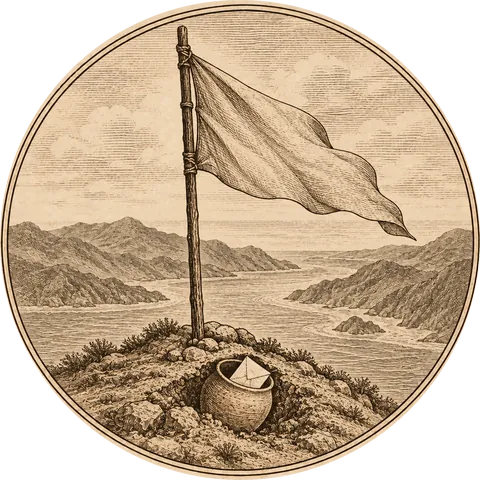
The Banner and the Buried Letter
Chapter 12 · The Strait
When the San Antonio vanished, the fleet planted banners on hilltops and buried letters in clay pots beside them, giving its course, in case she was only lost. She had deserted. Nobody ever read the letters.
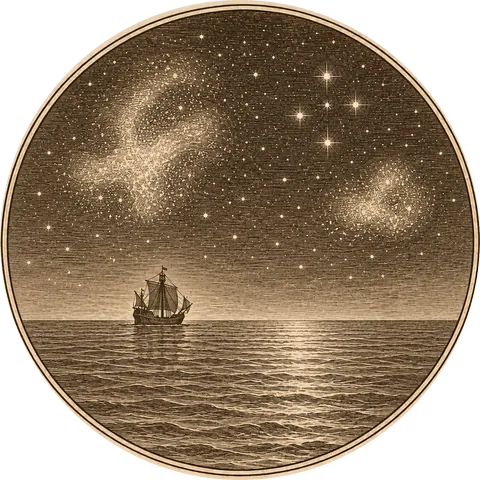
The Clouds of Stars
Chapter 13 · The Peaceful Sea
Two faint clouds of stars near the southern pole, and a cross of five bright stars. Pigafetta’s description of the southern sky is famous. The clouds are small galaxies close to our own, and they carry Magellan’s name.
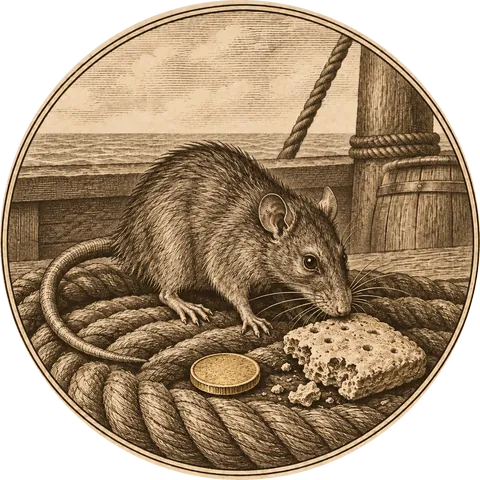
A Rat for Half a Ducat
Chapter 14 · Leather and Sawdust
In the middle of the Pacific, a rat sold for half a ducat, if anyone could catch one. The men ate worm-ridden biscuit dust, leather from the yards and sawdust. Nineteen died of scurvy before they saw inhabited land.
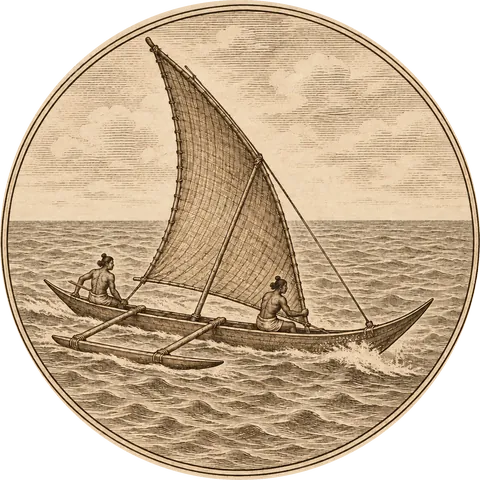
The Flying Proa
Chapter 15 · The Islands of Thieves
The Chamorro sailing canoe, with an outrigger on one side and a sail of woven palm leaves. It could sail with either end forward, and it skimmed the waves so fast that Pigafetta compared it to a leaping dolphin.
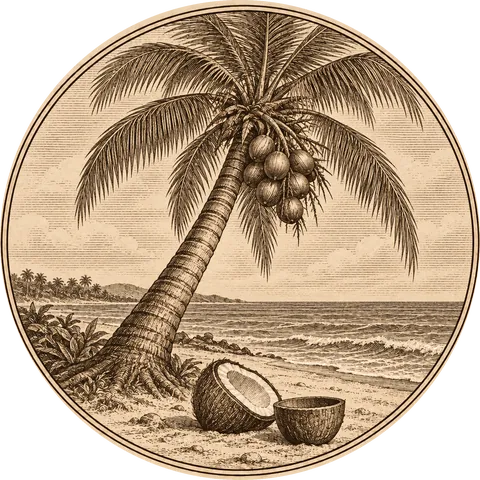
The Coconut Palm
Chapter 16 · The Watering-Place of Good Signs
Bread, wine, oil, vinegar and milk, all from one tree. At Homonhon, coconuts and fresh fruit brought scurvy-stricken men back to life, and Magellan gave the sick coconut water from his own hand.
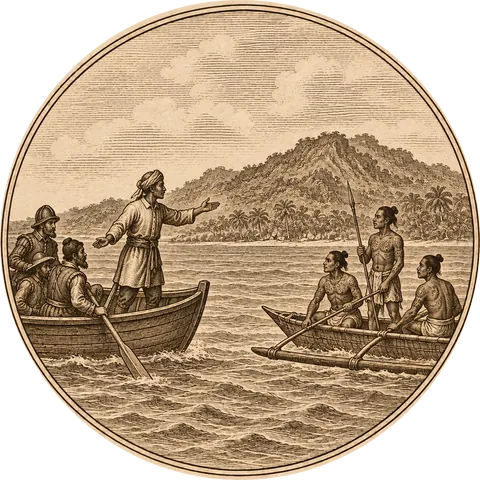
Enrique’s Voice
Chapter 17 · Mazaua
At Limasawa, Magellan’s slave Enrique called out in Malay, and the islanders understood him. The ships had sailed west until they reached a world whose languages were known from the east. If Enrique came from these islands, he may have been the first person to go all the way around the world.
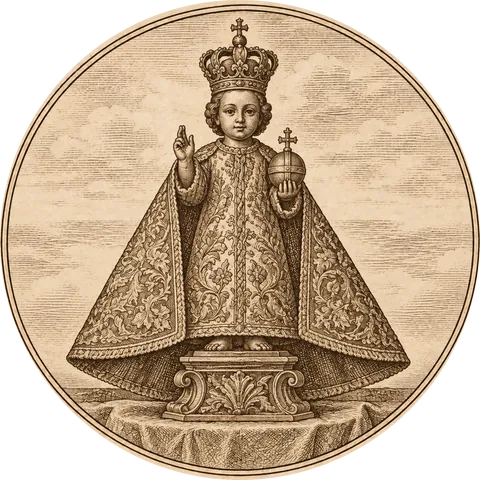
The Santo Niño
Chapter 18 · Zubu
A little carved figure of the Christ Child, given by Magellan to the newly baptised queen of Cebu. Forty-four years later a Spanish soldier found it unharmed in a burned house. It is still honoured in Cebu City today.
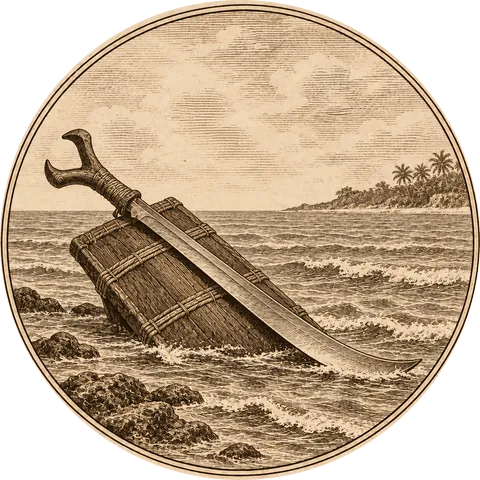
Lapulapu’s Blade
Chapter 19 · Mactan
A great cutlass, like a scimitar but larger, cut Magellan’s leg at Mactan and brought him down in the shallows. Lapulapu’s people would not give up his body for any price. Lapulapu is a national hero of the Philippines.
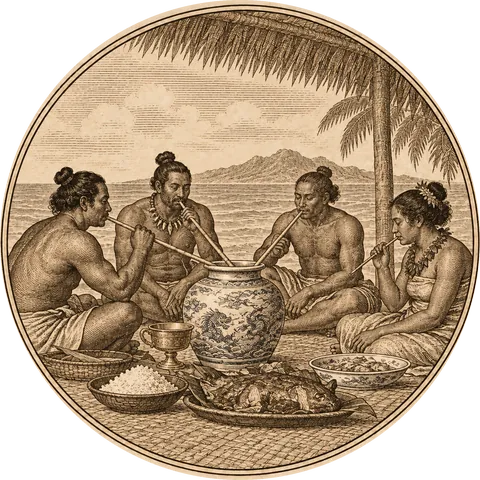
The Banquet Cup
Chapter 20 · The Banquet
Rajah Humabon invited the officers to a feast, to collect jewels for the king of Spain. Pigafetta stayed aboard because his face was swollen from a poisoned arrow. That wound saved his life.
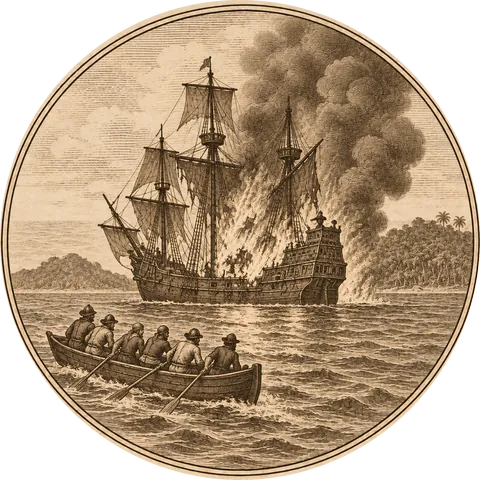
Embers of the Concepción
Chapter 21 · The Burning of the Concepción
Too few men were left to sail three ships, so the survivors stripped the Concepción and burned her off Bohol. She had carried them through the Atlantic storms, the mutiny, the strait and the Pacific.
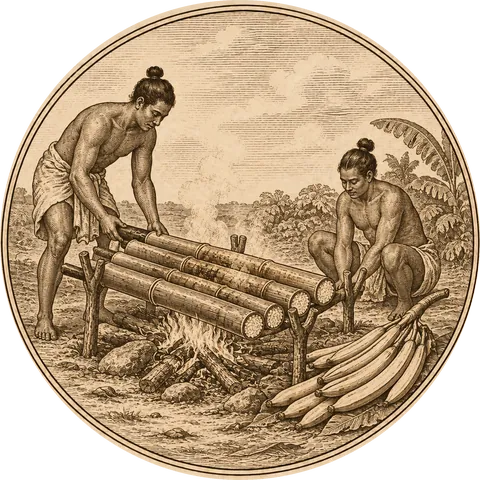
Rice in Bamboo
Chapter 22 · The Land of Promise
After weeks of hunger, Palawan fed them: rice cooked in lengths of bamboo, bananas as long as an arm, and strong rice wine. They called it the land of promise, and admitted they had been close to abandoning the ships.
A Coin of China
Chapter 23 · Burne
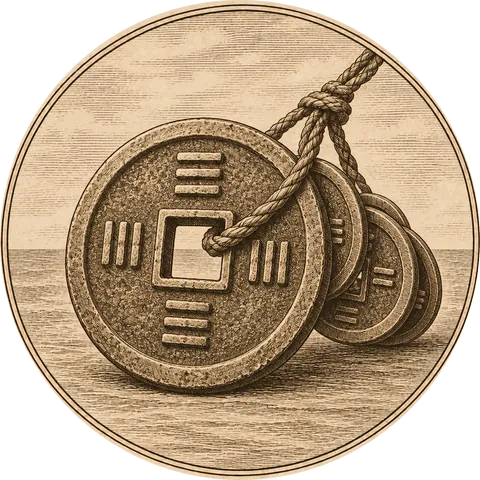
Bronze coins pierced through the middle and stamped with the letters of the great king of China. In Brunei, Pigafetta glimpsed an Asian world that ran on Chinese money and porcelain, where Spain hardly mattered.
The Walking Leaf
Chapter 24 · The Walking Leaves
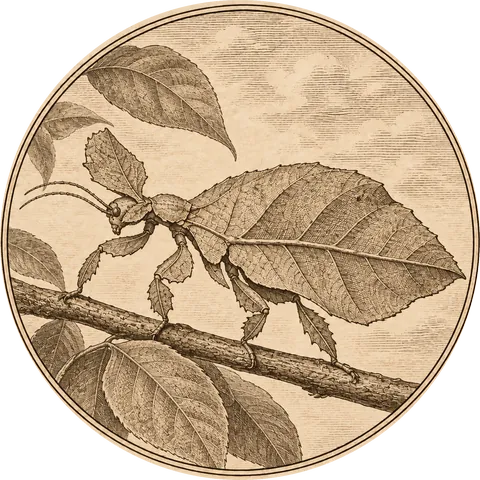
Pigafetta kept one in a box for nine days and watched it walk round and round. “I believe those leaves live on nothing but air,” he wrote. It was a leaf insect, disguised so perfectly that it even copies a leaf’s veins.
Sweet Wood
Chapter 25 · The Road to Maluco
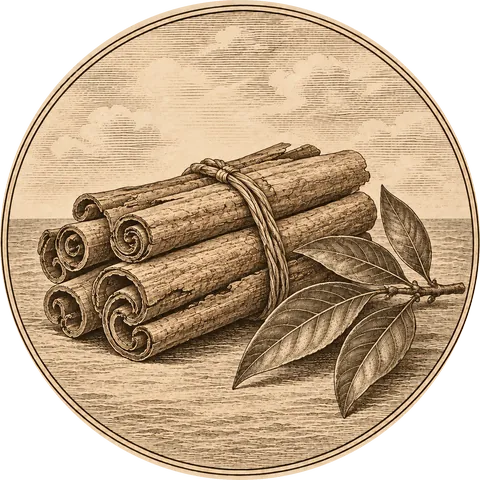
Cinnamon from the coast of Mindanao, which the people called caiu mana, sweet wood. Two captured knives bought seventeen pounds of it, traded over the side because the wind was too good to waste.
The Sultan’s Dream
Chapter 26 · Tadore
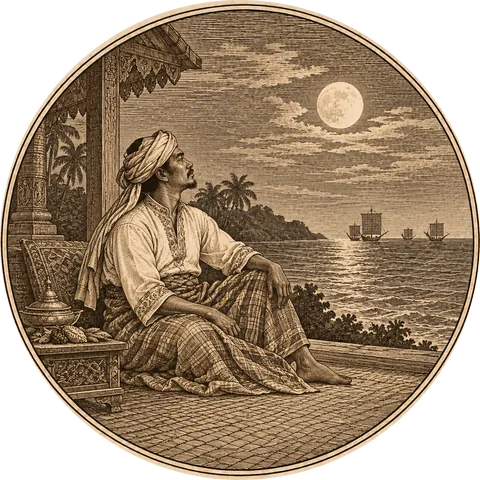
Sultan al-Mansur of Tidore said he had dreamed that ships would come from far away, and had consulted the moon to be sure. He welcomed the Spaniards as the ships of his dream. Portugal had been trading in these islands since 1512, but in secret.
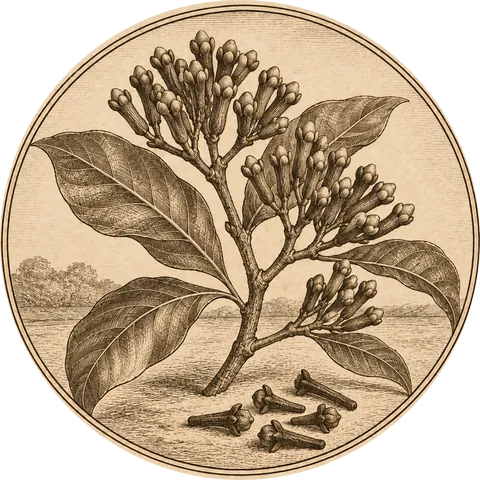
A Clove
Chapter 27 · The Clove Harvest
The dried flower bud of a tree that then grew on five small volcanic islands and nowhere else. White when it sprouts, red when ripe, black when dried. For this, men sailed around the world.
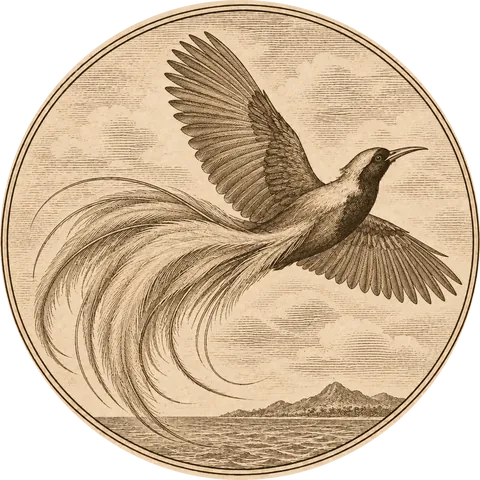
Birds of God
Chapter 27 · The Clove Harvest
Two dead birds of paradise, a gift from the king of Bacan to the emperor. Their skins came without feet or wings, so Europeans believed they lived their whole lives in the air. The people called them bolon diuata, birds of God.
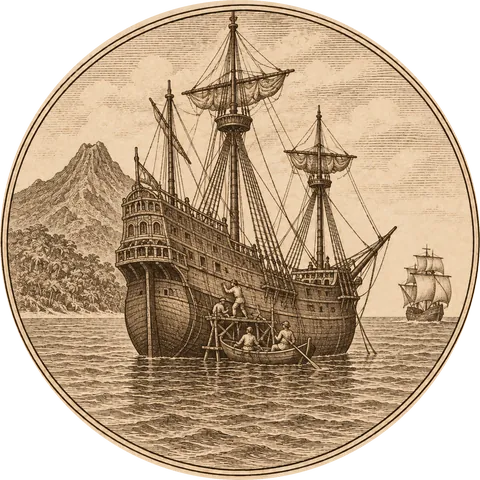
The Trinidad Stays Behind
Chapter 28 · The Parting
The flagship sprang a leak nobody could find, not even divers who let their loose hair drift towards it. She stayed at Tidore for repairs, and only four of her men ever saw Spain again. The Victoria sailed on alone.
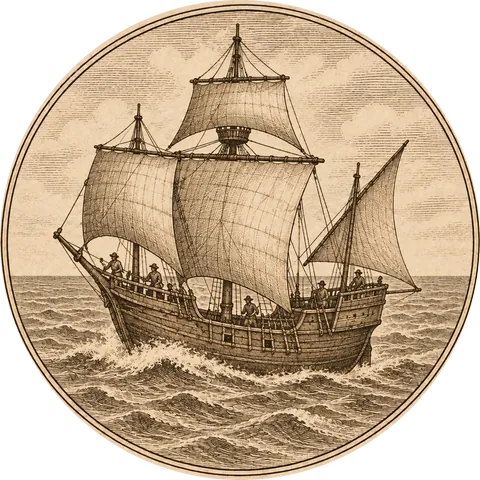
The Victoria’s Helm
Chapter 29 · The Victoria Alone
One ship left, commanded by Juan Sebastián Elcano, the pardoned mutineer of San Julián. Small, old, leaking and packed with cloves, she would finish the voyage alone.
White Sandalwood
Chapter 30 · Timor
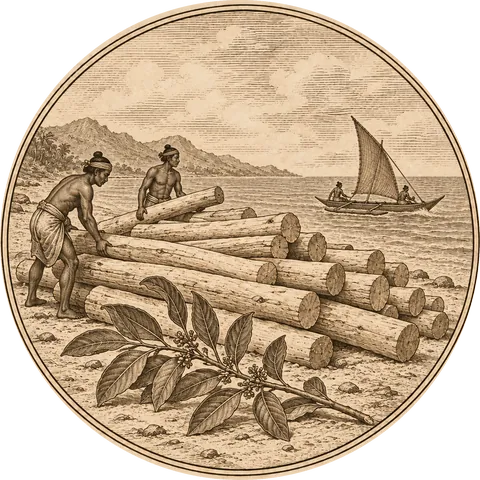
Timor was famous for its white sandalwood, which merchants from Java and Malacca came to buy. Pigafetta was told that the devil appeared to the men who cut it, and that it had to be cut at a certain phase of the moon.
Living or Dead
Chapter 31 · The Great Southern Sea
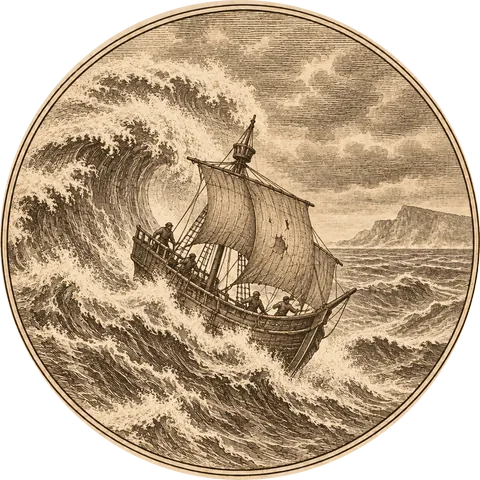
Starving in the cold far south, some of the men wanted to surrender at Portuguese Mozambique. The rest, Pigafetta wrote, were “more desirous of their honor than of their own life,” and they sailed on into nine weeks of storms off the Cape.
The Lost Day
Chapter 32 · The Lost Day
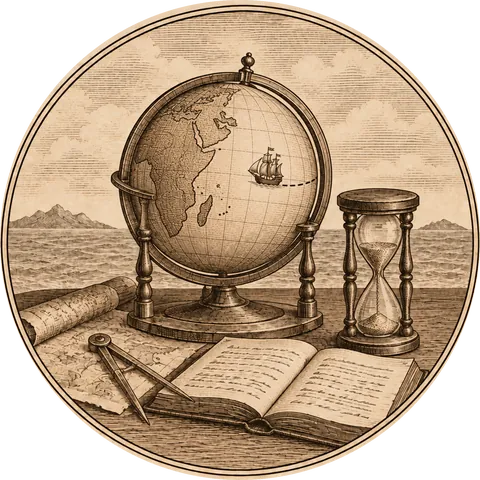
On the Cape Verde Islands it was Thursday. By Pigafetta’s careful diary it was Wednesday. Sailing west all the way round the world had cost them exactly one day, the effect the International Date Line now exists to handle.
Eighteen Candles
Chapter 33 · Eighteen Men
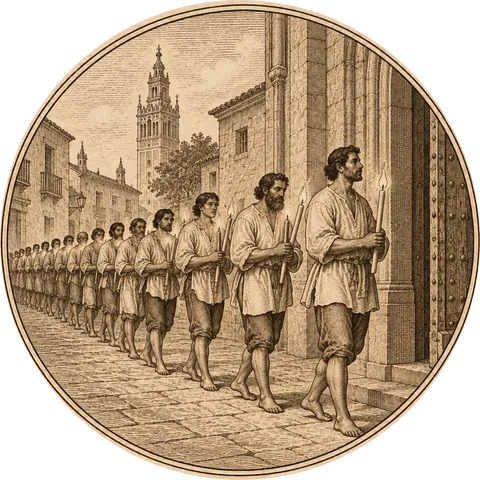
Barefoot, in their shirts, each holding a candle, the survivors walked through Seville to give thanks at the shrine of Santa María de la Victoria. Of 237 men, they were all who came home in the ship that went all the way round.
Pigafetta’s Book
Chapter 34 · The Book
He gave the emperor a book “written by my hand”. That copy is lost, but four manuscripts of his account survive. It is the only full eyewitness story of the first voyage around the world.